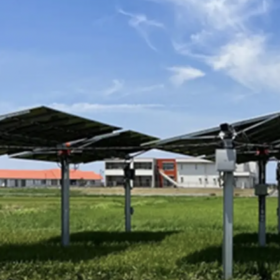
Idemitsu Kosan invests in agrivoltaics
Idemitsu Kosan says it plans to start building a 2 MW agrivoltaics facility in Japan later this year, following the successful conclusion of a 45 kW pilot project. The company has developed a proprietary agrivoltaics system based on tracker technology.
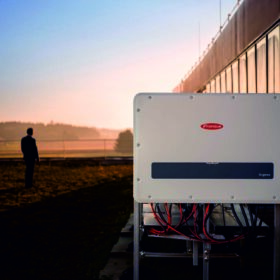
Fronius presents new inverters for C&I projects
The Austrian manufacturer said its new Argeno inverter features an efficiency of 99.1%, a European efficiency of 98.7%, and a rated AC power output of 125 kW.
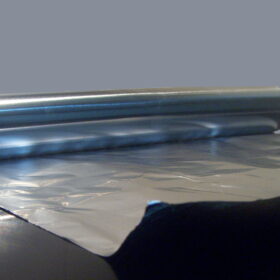
Aluminum foils can reduce temperature in double-glass PV modules by 6 C
Scientists in China placed a 0.5 mm thick aluminum foil between the solar cell and the EVA, and between the EVA and the glass layer. The two experimental modules were compared to a reference module and were found to dissipate heat and increase the in-plane temperature uniformity.

Slovenia allocates €16 million for solar energy communities
Slovenia has set aside €16 million ($16.7 million) to support solar energy communities, requiring projects to include at least 100 kW of PV capacity, with or without storage. The program will run until 2027.

UN refugee agency to power most of its offices with PV
The United Nations High Commissioner for Refugees (UNHCR) has revealed plans to install solar systems in 18 offices by 2025, aiming to cut emissions and reduce reliance on diesel.

Top 5 global inverter trends to watch in 2025
Challenges and innovations drive solar and energy storage inverter industry forward in 2025.
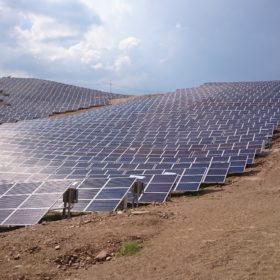
Turkey’s cumulative solar capacity doubles in 2.5 years to 19.6 GW
Ember, a London-based energy think tank, says in a new report that Turkey’s cumulative installed PV capacity has doubled to 19.6 GW in just two and a half years, driven by a surge in self-consumption projects.
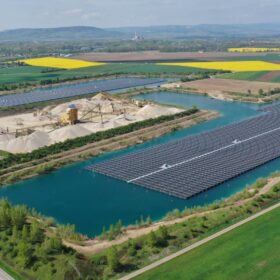
European consortium seeking to make floating PV more cost-competitive
An international team of floating PV specialists and researchers is working on affordability, sustainability, and reliability, as well as applying the latest technologies, to accelerate adoption.
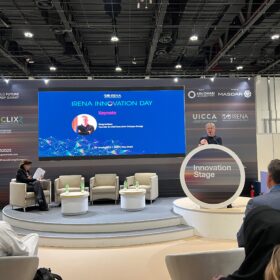
Octopus Energy CEO: Powering bargains with renewables
At the recent World Future Energy Summit in Abu Dhabi, Octopus Energy’s founder and CEO Greg Jackson urged market participants in the renewable energy sector to tap low-cost renewables to drive both clean energy adoption and acceptance. His speech was part of IRENA’s Innovation Day at WFES on January 14, 2025 and set the scene for a subsequent panel discussion on the topic “Digitalization to support the 3x Renewables Goal.”
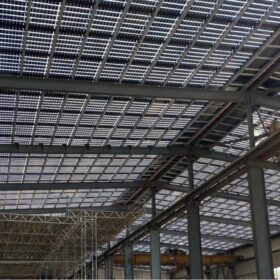
Swiss startup launches 400 W transparent BIPV panels
Climacy, a building integrated PV manufacturer, has launched a new semi-transparent 400 W glass-glass panel that is suitable for use in roofs or facades in residential, industrial and commercial buildings. When used as a roof or wall componentt, the 20% transparent panels reportedly allow more natural light into interior spaces than conventional PV designs.
