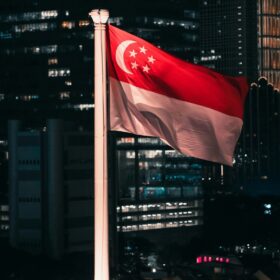
Singapore raises 2030 solar target to 3 GW
Singapore has increased its 2030 solar target by 1 GW after surpassing the original 2 GW goal before the end of last year.
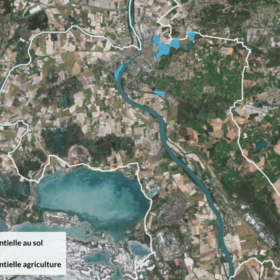
Engie launches mapping platform to visualize France’s renewable potential
France’s Engie has introduced Enermap, a free online platform that lets users evaluate the potential for solar, wind, hydroelectric, biogas, and battery projects at the municipal and regional level using government and research data.

Moldova installs 315 MW of solar in 2025
Moldova had a record year for solar deployment last year, taking cumulative capacity to 710 MW. There is now just under 1 GW of renewables installed in the country.
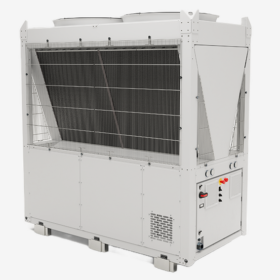
Daikin launches new propane heat pumps for commercial, industrial applications
Daikin has introduced two new propane heat pump lines for industrial and district heating applications, combining monobloc units from 20 kW to 85 kW with modular systems scalable up to 2 MW.
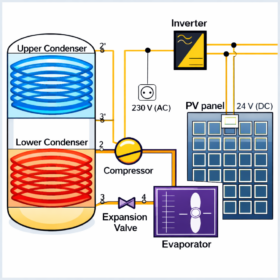
PV-assisted heat pump prototype with dual condenser reaches 7.59 coefficient of performance
Researchers in Spain have developed a dual-condenser air-to-water heat pump that shifts domestic hot water production to daylight hours, maximizing PV self-consumption. The prototype boosted solar energy use from 9.9% to 55.5% and achieved a peak coefficient of performance of 7.59 under PV-assisted operation.

India expected to install about 42.5 GW of new solar capacity in 2026
India installed around 37.8 GW of solar capacity in 2025, according to JKM Research. This comprised about 28.6 GW of new utility-scale solar, a 54.6% increase from 2024, and 7.9 GW of rooftop solar, up 72% year on year. Off-grid additions stood at 1.35 GW, compared to 1.48 GW in 2024.
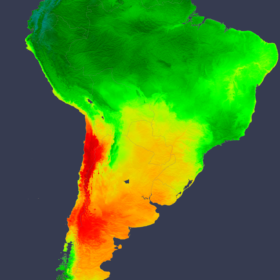
Tropical downpours cut northern irradiance as southern heat lifts sunshine in South America
In a new weekly update for pv magazine, Solcast, a DNV company, reports that January in South America featured dramatic weather contrasts with persistent floods and cloud cover in northern regions sharply reducing solar irradiance, while extreme heat, drought and wildfires in the south boosted sunlight yet also generated aerosol smoke that complicated irradiance outcomes. Severe storms, tornadoes and industrial fires further punctuated the month’s highly variable irradiance patterns across the continent.

Greece to open applications for 130 MW agrivoltaics plan
Greece’s distribution grid operator will begin accepting applications for agrivoltaic systems on March 4, marking the first step in implementing a new law targeting 130 MW of capacity nationwide.

Growatt debuts high-voltage battery for residential, small C&I solar
The APX HV Battery 2.0 supports 5–30 kWh capacities and up to 15 kW of output. The IP66-rated system features a stacked, cable-free design.
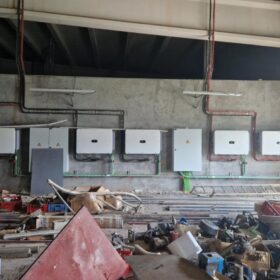
Spain’s self-consumption solar boom leaves trail of technical faults in C&I installations
A survey of more than 800 Spanish C&I PV installations following the 2019–2022 self-consumption boom found significant administrative, technical and monitoring deficiencies in all audited systems, with 13.2% of businesses reporting savings far below expectations.
