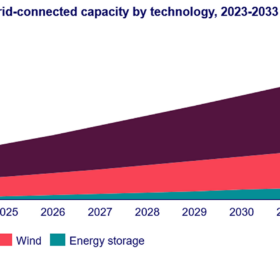
WoodMac predicts 3.8 TW of new solar by 2033
Wood Mackenzie says that solar will account for 59% of new renewables between 2024 and 2033. China is expected to drive the growth, accounting for half of new solar deployment over the projected time period.

Ukraine receives solar panels to power hospitals
Over 5,800 solar panels manufactured by Italy’s Enel have been delivered to Ukraine to help power healthcare facilties.
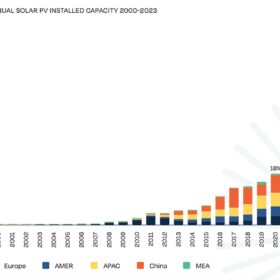
SolarPower Europe says 1 TW of solar could be annually installed by 2028
SolarPower Europe forecasts more than 1 TW of annual solar installations by 2028, but financing and energy system flexibility must be unlocked.

Amsterdam to allow solar panels on monuments
The Amsterdam municipal authorities say they will make installing solar panels and heat pumps easier and allow visible installations on monuments and heritage buildings.
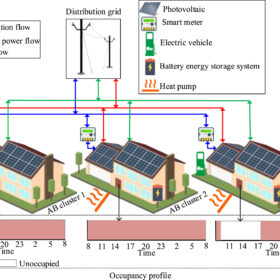
Peer-to-peer energy trading framework for residential buildings
Scientists in the UK developed a controller for B2B trading platform that considers thermal and visual comfort. Their modeling shows that participating in local energy trading increases the robustness of the control systems in residential microgrids in face of uncertainty in the occupant comfort level.
Croatia kicks off renewables tender
Croatian energy market operator HROTE is accepting submissions from developers until June 27 to secure market premium support for 607 MW of renewables projects, including 450 MW of solar.
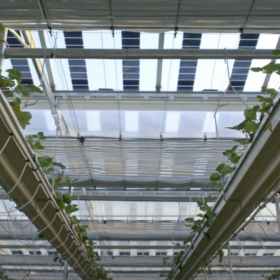
Strawberry agrivoltaic project combines PV, shade screens, rainwater harvesting
Insolight, an agrivoltaic specialist, has inaugurated a 3,000 sqm greenhouse project for a strawberry farm in France. The facility combines solar panels, shade screens, and rainwater harvesting.
Funding round opens for off-grid solar across West Africa
The Economic Community of West African States (ECOWAS) is offering grants from $10,000 to $250,000 in the second funding round of the Regional Off-Grid Electricity Access Project (ROGEAP) to develop off-grid solar in 13 West African and sub-Saharan African countries. The application deadline is June 23.
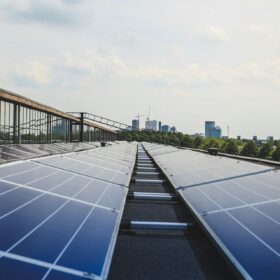
Ireland opens fixed tariff scheme for small-scale solar projects
The second phase of Ireland’s Small-Scale Renewable Electricity Support Scheme (SRESS) is aimed at local communities and small- and medium-sized enterprises that produce their own electricity.
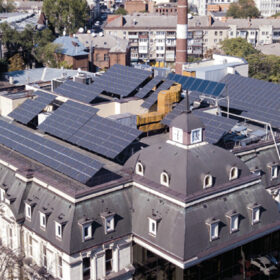
Coalitional game theory to improve P2P trading in energy communities
An international research group has utilized a newly designed coalitional game system to ensure economic fairness between members of energy communities. The game system considers different types of prosumers relying on stand-alone and combinations of solar and storage.
