
Solar leads all forms of energy in digitalization: DNV GL
In a recent survey, DNV GL found that demand for blockchain-related skills in the solar sector is 50% higher than in other energy industries, while 33% of respondents said that the use of drones is having a significant impact on their businesses. However, the solar industry needs a common framework to help advance digitalization further.
Holaluz, Chint Energy sign deal for 500 MW of solar in Spain
Spain’s Holaluz has agreed to buy electricity from up to 500 MW of solar capacity that China’s Chint Energy plans to build in Spain. The investment has been estimated at roughly €350 million.
UK Labour Party vows to roll out solar on 1.75m homes
The UK Labour Party has revealed plans to facilitate the installation of solar panels on 1.75 million homes, with a particular focus on low-income households.
SECI extends deadline for 3 GW India tender
State-owned Solar Energy Corp. of India (SECI) has once again extended the bid submission deadline for its latest 3 GW, manufacturing-linked solar tender, following a tepid response.
Australian aged care sector turns to solar for lower energy bills
With the annual cost of energy rising per bed across Australia’s aged care sector, C&I PV and energy-efficiency specialist Verdia says that a major energy transformation is taking place throughout the country.

ABB, Evolvere jointly launch blockchain energy pilot
The Swiss power group and Italian utility Evolvere have started a blockchain pilot project designed to facilitate transparent, secure peer-to-peer energy trading.

Interview: ‘Technological innovation… the main cost driver’
After close to a decade of dramatic module cost declines, a new era of subsidy-free, utility-scale PV projects in dawning in Europe. But rather than ever-cheaper commodity modules, Radu Roman expects that technological innovation, particularly at the module level, will boost performance and continue solar’s subsidy-free expansion. Roman is Jinko Solar’s product and business development manager for Europe and will be a panelist at the Future PV Roundtable in Munich on Wednesday, May 16.

Are Greece’s solar tenders ill-designed?
Greece has run solar tenders on three different occasions in the past year, awarding a total of 546 MW of new PV capacity. In all three instances, Greek consumers were manipulated and the country’s institutions did little to protect them.

Public consultation opens for 11 GW renewables hub in Australia
The Western Australian Environmental Protection Authority is seeking public input on the massive Asian Renewable Energy Hub proposed for the country’s Pilbara region.
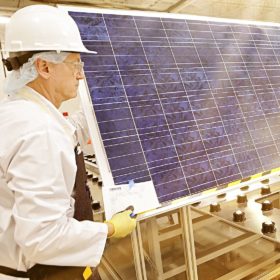
Canadian Solar obtains $50m loan from Credit Suisse
The Chinese-Canadian manufacturer has revealed that it has finalized a $50 million term loan from Credit Suisse. It plans to use the loan to fund the expansion of its global PV project pipeline.
