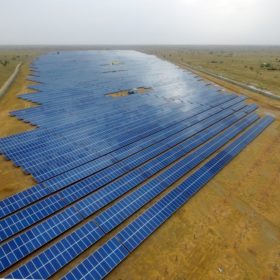
India to add up to 8.5 GW of RE in FY19
India is likely to add between 8-8.5 GW of renewable energy generation capacity in the current financial year ending March 2019, according to research and rating agency ICRA Limited.
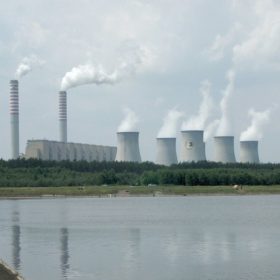
Solar, not coal, can stop hike in electricity prices in Poland
Polish research institute IEO released a new analysis showing increasing power prices in the Eastern European country, due to the current energy policy, which still strongly relies on coal power. Replacing coal with solar power, it argues, would likely result in decreasing power prices.
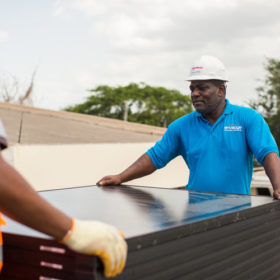
Jamaica’s prime minister calls for 50% renewables by 2030
Jamaica is currently targeting a 30% share of renewables in its energy mix by 2030. However, the nation’s prime minister says, “We can do better.”

Subsidy payment delays put northwest China PV projects at bankruptcy risk
An investigation by mainland China regulators has found that subsidy payment delays in the northwest region of Ningxia are putting PV projects at risk of bankruptcy.

Moldova plans to hold RE auctions in 2019 and 2020
The eastern European nation is being assisted by the European Bank for Reconstruction and Development with the creation of tender documentation for renewable energy auctions.
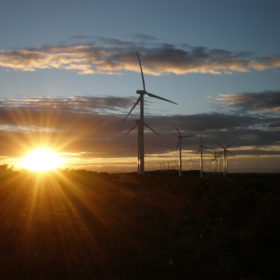
‘There is no alternative to a world of 100% renewables’
Electrifying the global energy system with clean energy is the only way to reach the targets set by the Paris agreement on climate change and avoid the catastrophic scenarios outlined by the recent IPCC report. In an interview with pv magazine, Christian Breyer – Professor of Solar Economy at Finland’s Lappeenranta University of Technology – explains a 100% renewables model is not only technically feasible, but also the cheapest and safest option. With solar and storage at its core, the future energy system envisaged by Breyer and his team will not only stop coal, but also nuclear and fossil gas, while seeing solar reach a share of around 70% of power consumption by 2050. By that time, PV technology could cost a third of its current price.
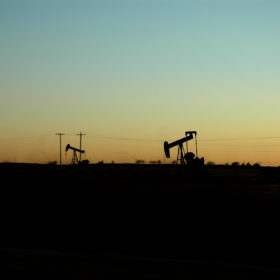
Ukraine’s Naftogaz begins investing in solar power
The nation’s oil and gas provider is building its first small-sized PV projects at facilities operated by Ukrtransgaz, the Ukrainian gas transport system.
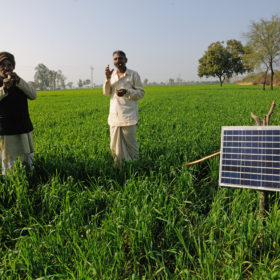
Rural India offers a $50bn opportunity for clean energy innovations
The farming sector alone offers a potential $40bn marketplace, thanks to rice transplanting, pesticide spraying and grain harvesting – says the Council on Energy, Environment and Water thinktank.
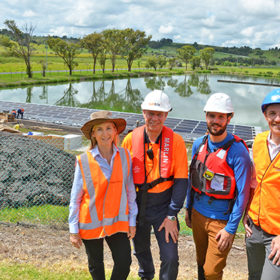
ARENA backs corporate PPA platform aiming to drive 5 GW of Australian renewables
An AUS$500,000 capital injection from the arms-length, state-funded renewable energy organisation takes to $800,000 the amount of public money which will be donated to a $1.74m project designed to make procuring clean energy easier for business and local authorities.
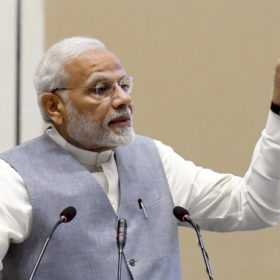
India added world’s second largest PV capacity in first half of 2018
The nation installed 4.9 GW of solar, surpassing the USA – which installed 4.7 GW – to become the second largest solar market in the first half of the year, second only to China’s 24.3 GW.
