
Portugal’s EDP confirms plans to divest generation assets and invest in renewables
The utility could invest up to €7 billion in renewable energy projects up to 2022.

No more auctions for solar and renewables in Mexico
CFE boss Manuel Bartlett has again stated the national utility will not buy electricity from private companies as it can generate power itself. It is unclear whether CFE intends to develop solar assets.
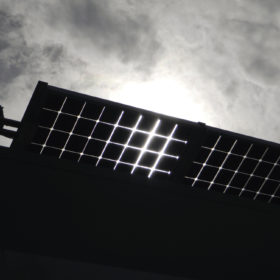
Chinese manufacturer Seraphim’s new 1 GW module fab will produce bifacial, half-cut modules
The Changzhou-based company, which has established the Shanxi facility with state-owned rival Shanxi Lu’An Photovoltaics Technology, has not revealed what proportion of the factory’s output will feature the high efficiency technology.

Saudi’s Alfanar to fund 100 MW solar project in Bangladesh
The infrastructure company will provide $100 million to develop the plant in the country’s Feni district, which is a draw for solar developers because of designated economic zones being planned there.
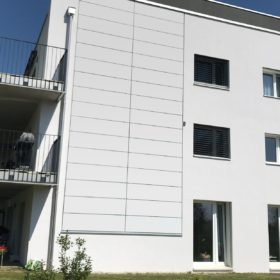
BIPV in Europe: More than just a facade
The renowned PV-Lab at Switzerland’s École Polytechnique Fédérale De Lausanne today announced that it has taken on the role of coordinator for the EU funded research project ‘Be-Smart’, which aims at developing a European industry for building integrated PV components.

Brazilian government confirms solar will compete in June A-4 auction
In a document published in Brazil’s official journal, the Ministry of Energy and Mines said the upcoming procurement exercise will be open to solar, wind, biomass and hydroelectric power projects.

The hurdles in the way of Spain’s rich solar promise
On Thursday, PV conference organizer Solarplaza and Spanish solar association UNEF will host the Solar Market Parity conference in Madrid. pv magazine’s Pilar Sánchez Molina will participate in the Vision of the future: Spain in 2030 panel.

French regulator proposes tightening up controversial carbon footprint rules
In a report which states utility-scale PV project development in France can cost as little as €600 per installed kilowatt, the CRE has made recommendations including factoring in transport and full supply chain costs into the calculation of how environmentally friendly solar panels are.
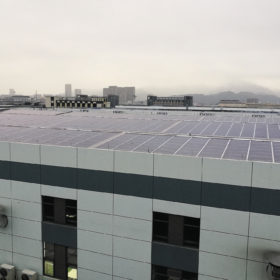
The weekend read: A battery and inverter powerhouse
In December, pv magazine met SolaX Power president Li Xinfu and his team at the company’s headquarters in sprawling Hangzhou, in Zhejiang province. The region is a hotspot for the Chinese PV industry and SolaX belongs to the cutting edge of Chinese inverter and residential battery manufacturers.
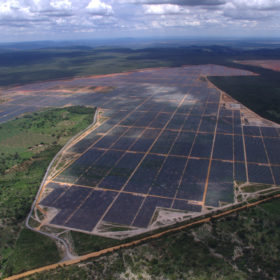
Solar becomes a must-have for utilities
Motivated by steeply declining cost curves, leading utilities are building solar portfolios around the globe. The latest statistics show the cumulative capacity of the biggest utility-scale solar plant owners topped 18 GW at the end of last year, with power companies in China, the U.S. and India to the fore.
