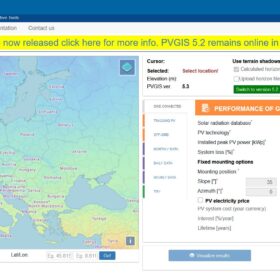
EU upgrades open-access tool to assess residential solar-plus-storage yield
The European Commission has released version 5.3 of its free Photovoltaic Geographical Information System (PVGIS) tool, which calculates the yield of residential solar-plus-storage systems and provides global solar radiation and PV performance data.

Voltalia, Taqa Arabia to develop Egyptian 3 GW wind-solar facility
French developer Voltalia and Egyptian energy distribution company Taqa Arabia have signed a memorandum of understanding to turn an existing 545 MW wind farm into a 3 GW hybrid wind-solar site.
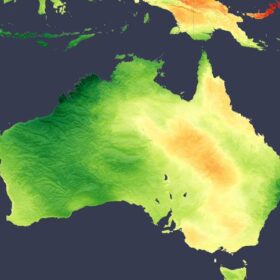
Cloudier summer predicted for Australia’s East Coast solar
In a new weekly update for pv magazine, Solcast, a DNV company, reports that the upcoming Australian summer is likely to see cloudier than usual conditions, potentially reducing solar generation across key regions, especially along the East Coast.

Understanding renewable energy ‘drought’ at solar, wind sites
An international research team based across Canada, China and the US have said developers must stop focusing not only resource availability, and also consider resource variability and resource extremeness, to avoid renewables “drought” at solar and wind sites.

Learning from leading rooftop solar markets
A report from the Council of Energy, Environment and Water has analyzed nine of the ten countries with the largest rooftop solar markets to offer recommendations to other economies looking to accelerate rooftop solar deployment.

Dutch parliament approves end of net metering in 2027
Trade body Holland Solar says the Dutch parliament has approved eliminating net metering in 2027, giving the solar sector clarity to move forward.
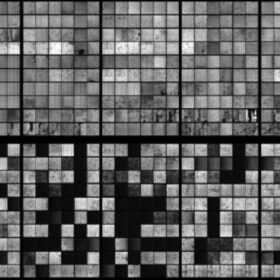
Nine-year EL testing on 85,000 PV modules shows increasing presence of edge ribbon cracks
A UK research team used electroluminescence imaging to inspect 167 PV installations comprising a total of 5 million solar cells. Defects were categorized into into line cracks, complex cracks, edge-ribbon cracks, and potential-Induced degradation (PID).

Australia moves 1.4 GW of new solar, wind projects forward in Q3
Investment in large-scale renewable energy generation continues to trend upwards in Australia with more than 1.4 GW of new solar and wind projects, worth $3.3 billion, reaching financial commitment in the third quarter of 2024.
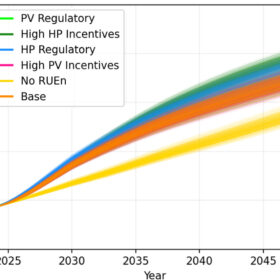
Stuck in a loop: The co-adoption dynamics of PV and heat pumps
Scientists in Switzerland have created a system-dynamics model for the adoption of PV and heat pumps in Swiss residential buildings up to 2050. They have examined several scenarios to see how the incentive for PV affects heat pump adoption and the other way around, and they have concluded that strong regulatory changes are necessary to completely decarbonize the residential sector.
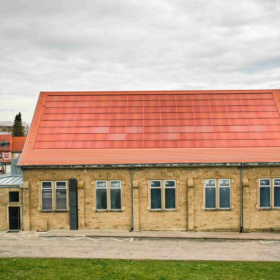
Custom-colored modules increase social acceptance of building-integrated photovoltaics
A study by the University of Freiburg and the Fraunhofer Institute for Solar Energy Systems finds that deploying color-matching solar modules on a building’s roof or facade further increases social acceptance of building-integrated photovoltaics (BIPV).
