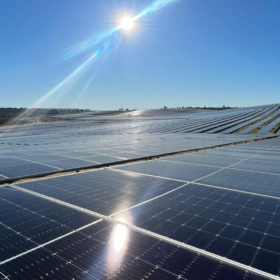
Portugal grants 5 GW of grid-connection permits, mostly for PV
Portugal’s Ministry of the Environment has awarded 5 GW of grid-connection permits, primarily for PV projects. These permits cover 5 GW for power plants linked to the high-voltage transmission network and an additional 1 GW for projects connected to E-Grids at lower voltage levels.
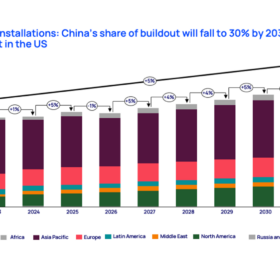
WoodMac predicts 270 GW of new global PV capacity in 2023
Wood Mackenzie expects 270 GW of new global PV capacity in 2023, up 33% year on year. However, the annual growth rate is anticipated to fall to 1% in 2024 and to increase again by 5% in 2025.
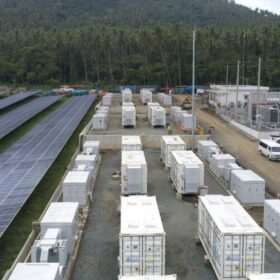
India tenders 1.5 GW of renewables storage
Solar Energy Corp. of India (SECI) has launched a tender to select developers for 1.5 GW of firm and dispatchable power from renewable power projects with energy storage systems. Bidding closes on Sept. 15.
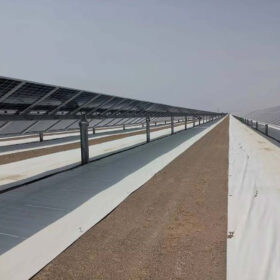
PVC knife-scratch coated fabric to increase albedo, energy yield in bifacial PV
China-based Halead is offering a reflective material for ground-mounted bifacial PV projects, which it claims can increase the annual power production of a solar plant by over 9%. Germany’s TÜV SÜD certified the performance of the solution.
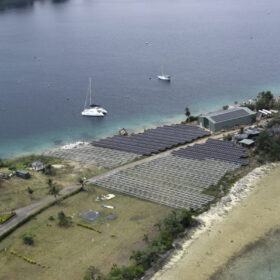
Financing implementation of solar energy solutions in the Pacific Island countries
The International Solar Alliance said that securing financing for renewable energy projects in Pacific Island Countries (PIC) may be complex due to the need for stand-alone solar energy systems and mini-grids, which to be viable for larger investments would require aggregation at a sectoral or programmatic level to become feasible. In its monthly column for pv magazine, the organization describes the types of finance required to scale technologies.

Cox Energy finalizes acquisition of Abengoa
Cox Energy secured the assets of Abengoa in April 2023. Abengoa began insolvency proceedings for its main business unit in May 2022.
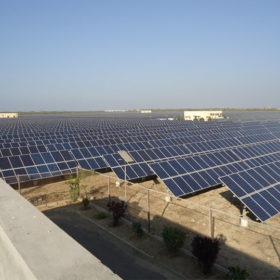
Tata Power secures PPAs for 350 MW of solar projects
Tata Power Renewable Energy will develop 200 MW and 150 MW solar projects for Maharashtra State Electricity Distribution Co. Ltd (MSEDCL). The installations will be located in the Indian state of Maharashtra.
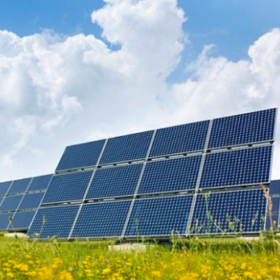
South Africa closes in on 4.41 GW of rooftop solar capacity
News statistics from South African utility Eskom show that the country added 1.82 GW of new distributed-generation PV capacity in the first six months of this year. However, PV analyst Chris Ahlfedlt warns that the published numbers could also include some utility-scale projects.
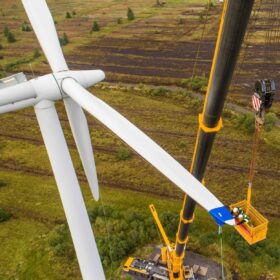
Ingeteam sells O&M division to RES Group
Ingeteam has sold its operation and maintenance (O&M) division to UK-based RES Group. It say the 35 GW renewable assets are worth €35 billion ($38.2 billion).
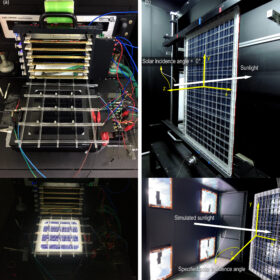
LED media facade for BIPV applications
Scientists in Korea have built a light-emitting diode (LED) facade that can be used in combination with building-integrated PV, with minimal power loss caused by shading. The grid-type LED display can be used as a media façade in buildings making PV power generation more aesthetically appealing.
