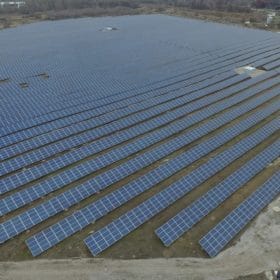
A net-zero Canada would need 1.6 GW of solar per year from now on
Clean energy trade group the Canadian Renewable Energy Association has told policymakers CA$8 billion worth of solar and wind projects will be needed each year to decarbonize the electricity supply by 2035 and remove net emissions by mid century.
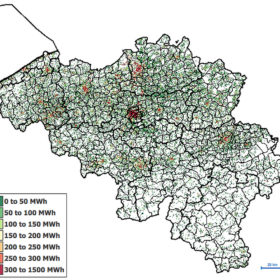
Belgium’s rooftop solar potential estimated at 99.6 GW
According to recent analysis by Belgian institute EnergyVille, rooftop PV and onshore wind have the technical potential to reach 118 GW of capacity in Belgium. Of the three Belgian macro-regions, Flemish-speaking Flanders is the one with the largest solar potential for rooftop systems, at 67.56 GW, followed by French-speaking Wallonia, with 31.54 GW, and the Brussels metropolitan region, with 4.23 GW.

Hunting the sun with Harris hawks optimization algorithm
An Iranian-Canadian-based research group has conceived a nature-inspired algorithm to estimate the model parameters of PV systems. The proposed tool mimics the exploring, exploiting and attacking strategy of the Harris hawk, a bird of prey species that cooperates when hunting.

European Commission approves €2.3bn renewables incentive plan by Greece
Competitive bidding for onshore solar and wind will establish a clean-power strike price acceptable to successful developers under the contracts-for-difference approach. The incentive scheme is also applicable to biogas, biomass, landfill gas, hydropower, concentrated solar power, and geothermal plants.

New German government coalition wants to deploy another 143.5 GW of solar this decade
The new plan would require the deployment of around 15 GW of new PV capacity each year to 2030. The agreement also includes the gradual phasing out of all coal power plants by the end of the decade.
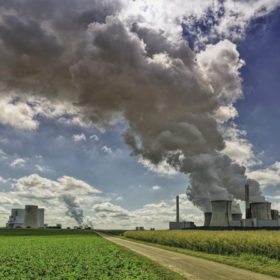
Round-the-clock tenders can help India meet demand for firm renewable power
A report has stated the renewable-plus-fossil fuel model is the best short term option to meet the assured supply conditions in the Solar Energy Corporation of India’s round-the-clock power tenders. Further out, as the cost of batteries decline, that technology is likely to become the most viable option for providing critical, non-intermittent power.

Malaysia launches scheme enabling consumers to buy renewable energy
Through the Green Electricity Tariff (GET) program, the government will offer 4,500 GWh of power to residential and industrial customers each year. These will be charged an additional MYE0.037 ($0.087) for each kWh of renewable energy purchased.

South Korea’s largest floating PV plant now online
The 41 MW facility was built by Korean developer Scotra with solar modules provided by South Korea-based manufacturer Hanwha Q-Cells. It was deployed on a water reservoir at the Hapcheon dam, in the South Gyeongsang province.
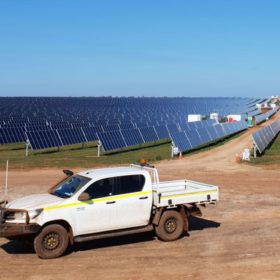
Renewables to drive down prices as fossil-fuel generators exit Australian electricity market
Ongoing growth in both renewable generation capacity, including rooftop solar, large-scale wind and solar, and dispatchable power in the form of big batteries is expected to drive down household power bills across the National Electricity Market in the coming years despite the impending closure of several of Australia’s ageing fossil-fuel fired power stations.
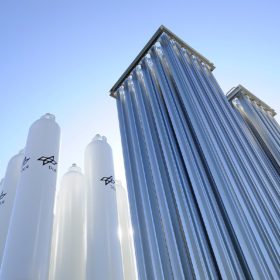
Utilities and financial investors are investing in renewables, especially hydrogen, like never before
A new Ernst & Young power and utilities overview report shows that utilities and other deep-pocketed investors are putting financial support behind their environmental, social and governance initiatives.
