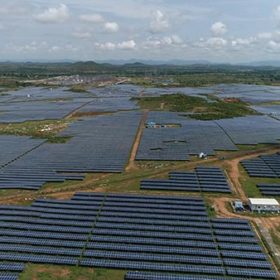
India: Tata Power secures 100 MW distributed solar order from EESL
Tata Power Solar has landed the engineering, procurement, and construction work for 100 MW of distributed solar capacity in India’s Maharashtra. The awarded capacity includes multiple ground-mounted projects.

French developer secures backing for 30 MW in Burkina Faso
GreenYellow, a French energy solutions provider, has secured a €4.5 million guarantee from the Multilateral Investment Guarantee Agency to facilitate the construction, operation and maintenance of a 30 MWp solar project in Burkina Faso.
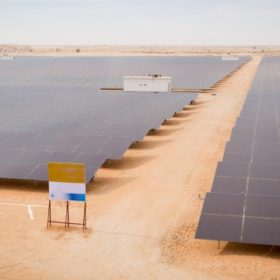
10 GW Desert to Power PV initiative picks up $150 million in funding
The Green Climate Fund has announced it will provide US$150 million in funding to the Desert to Power initiative – a project led by the African Development Bank and spanning several countries that aims to build 10 GW of PV generation capacity in various projects across the Sahel region to the south of the Sahara Desert.
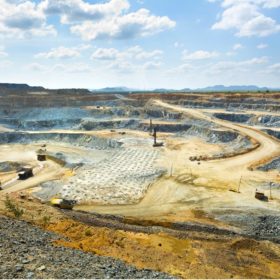
Pele Green, EDF consortium to build 100 MW PV plant in South Africa
Platinum group metals mining giant Anglo American Platinum (Amplants) has selected Pele Green Energy and EDF Renewables South Africa as the preferred developers to build a 100 MW solar PV plant in South Africa.
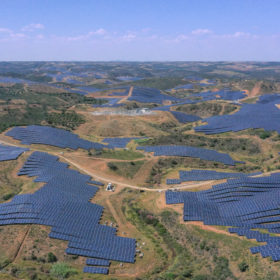
Portugal completes 219 MW unsubsidized PV project
Ireland-based WElink Group and China Triumph International Engineering Co. Ltd have announced the completion of the 219 MW Solara 4 project in Portugal’s Algarve region. An inauguration ceremony for the project was held last week, and it is expected to begin full operations before the end of October.
Longi to supply PV modules to Beximco’s 200 MW Bangladeshi solar project
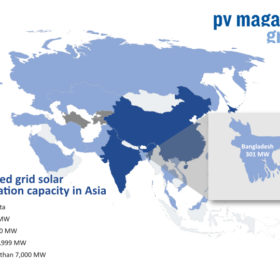
Chinese PV manufacturer Longi Solar has reportedly signed a deal to supply its HI-MO 5 series modules to Beximco Group’s 200 MW Teesta Solar Limited project. The EPC contractor has also been identified as a consortium comprising India’s Rays Power Infra Private Limited and Zetwerk Manufacturing Businesses Private Limited.
Reliance Industries’ new energy arm to acquire 40% stake in Sterling and Wilson Solar
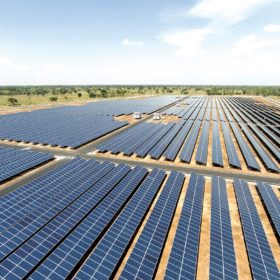
The acquisition gives Reliance New Energy Solar access to Sterling and Wilson Solar’s PV plant engineering and project management skills as it aspires to become a global leader in green energy based on the latest and most cost-competitive technologies and development capabilities.
The Hydrogen Stream: New magnesium-based composite for hydrogen storage and a big push from South Korea
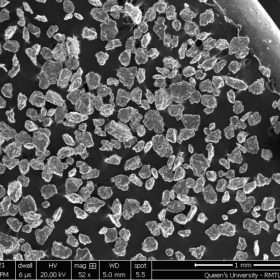
Researchers at Canadian Nuclear Laboratories (CNL) identified a new magnesium-based alloy that could be used for hydrogen storage. Furthermore, Hyundai Mobis announced a $1.1 billion (€0.95 billion) investment in two new fuel cell plants in South Korea, while South Korea’s SK Group formed a joint venture with US hydrogen solutions company Plug Power to develop green hydrogen across several Asian countries.
Maxeon refurbishes Mexican factory to set up 1.8 GW module manufacturing hub for US market
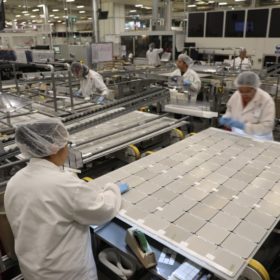
The Singapore-based manufacturer operates two factories in the Baja California state bordering the United States and the entire output of the facility in Mexicali will be shipped exclusively to the US market. Furthermore, the company’s chief revenue officer, Mark Babcock, told pv magazine that a manufacturing facility is also being considered in the US.
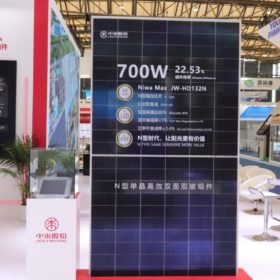
Jolywood unveils 700 W TOPCon PV module
The double-glass product has dimensions of 2,384 x 1,303 x 35 mm and a weight of 38 kg. It is based on the company’s n-type TOPCon 2.0 cell technology dubbed Niwa Max, which the manufacturer said reached efficiencies of up to 25.4% in the laboratory. The module’s efficiency ranges from 21.73 to 22.53%.
