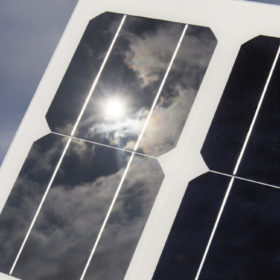
The weekend read: Reflections on a soiled module
Having quickly proven their performance-boosting potential and durability, anti-reflective coatings are now found on the majority of modules rolling off the world’s production lines. Today, coating suppliers are looking to tackle losses from soiling as well as reflection, and working to keep up with cost reductions and extended lifetime expectations at module level. Older modules, installed without a coating, could also be set to benefit from the latest innovations.

Indian state of Maharashtra’s 1 GW tender attracts bids for 1.9 GW
Domestic developers Avaada Power and Adani lead the way with each bidding for half the capacity available, after the state distribution company raised the maximum tariff and extended the bid deadline.
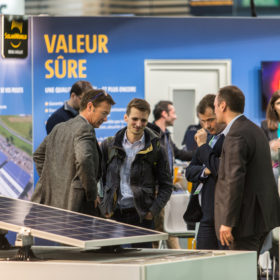
BePositive 2019 trade show – just a few weeks away – taking PV center stage
The show is expected to grow by 40% compared to last year. And the organizers say solar PV will have a higher profile than ever.
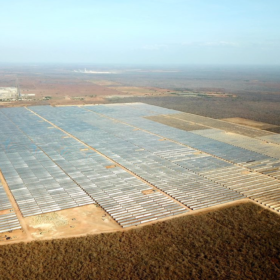
Scatec off to a strong start in 2019 with solid financials and pipeline additions
Having put key PV projects into commercial operation, the company is capitalizing on their production. Scatec also has twice its current installed capacity under construction and nearly fourfold that amount – more than 4 GW – in the pipeline as 2018 expectations were surpassed.
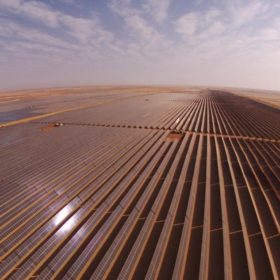
64 MW project connected at Benban
Alcazar Energy has announced the start of commercial operation for a project at Benban, in Egypt. Alcazar says it is the first of more than 30 planned projects in the second round of the mammoth solar park to achieve grid connection, and one of four similar sized projects the company is working on at the site.

Western Canada’s first solar park secures financing – and will incorporate bifacial panels
The 23 MW Suffield Solar Project is under development by Chinese-Canadian company Canadian Solar in Alberta. The project received CA$15.3 million in funds from the federal government under the Emerging Renewable Power Program.

African Development Bank’s $25 million for sub-Saharan renewables
The investment will be made into a larger equity fund which seeks to develop 533 MW in the market, which currently has the lowest rate of access to electricity in the world. Even small capacity additions can bring economic impacts to many people.

Abu Dhabi’s Masdar vies for stake in Indian developer Hero Future
State-owned Masdar Clean Energy is in talks to acquire a 30-35% stake in Hero Future Energies. With the stake sale, the renewable energy arm of Hero Group expects to raise $300-350 million for its expansion into global markets, according to reports.

China ready to set 3 GW quota for residential solar in 2019
Sources have told pv magazine the authorities are ready to restart the nation’s residential rooftop segment and have also agreed upon subsidy payments for other distributed generation and utility-scale projects.
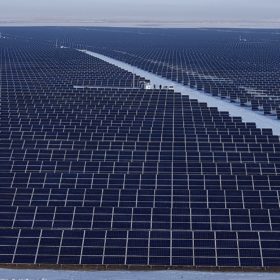
100 MW Saran solar park commissioned in Kazakhstan
The SES Saran solar project is in the Karaganda region. The project was financed by the European Bank for Reconstruction and Development and built by German developer Goldbeck.
