
Hungary deployed more than 400 MW of solar in 2018
The nation had a record year for solar energy development. Most of last year’s new additions – 320 MW – came through a FIT scheme but a further 90 MW was represented by net metered installations. Hungary’s cumulative installed PV capacity reached around 700 MW in 2018.

Inverter maker offered customer €50 for replacement product which would have carried ‘thousands of euros’ of associated costs
Often, it is not inverter faults that frustrate customers – such things happen – it is poor customer service. Here we look at the first of a series of cases that will be discussed at the pv magazine quality roundtable planned for Intersolar Europe, in Munich, which indicates what the industry must avoid in future.

Croatian utility announces 350 MW solar expansion plan
After issuing its first call for renewable energy projects in February, power company HEP has now announced it will invest $23 million annually in solar until 2023, to add new capacity additions of 20 MW per year. The 350 MW plan is expected to be complete in 2030.

PV projects totaling 26 GW to compete in Brazil’s A-4 auction
Energy agency the EPE has admitted 1,581 projects with a total capacity of more than 54 GW to the procurement exercise’s initial phase.

Tokyo Gas buys 50% stake in Engie’s Mexican renewable energy unit
The Japanese gas provider has acquired a 50% interest in four Mexican PV projects with a combined capacity of 746 MW. The new joint venture will further develop solar and renewables across the country.
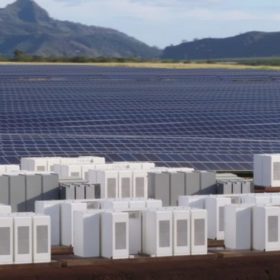
Storage set to come of age in the next five years
The transition for utility scale storage from offering short duration, high value grid services to the world of long duration energy peaking could spell the end of fossil fuel backup generation within five years.
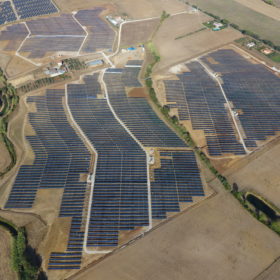
PV projects above 100 MW capacity proliferate in central Italy
Tuscia, in the Lazio region, is the focus of plans for several big solar parks including a 150 MW project approved by the regional government, two schemes exceeding 100 MW and six more projects ranging in size from 17 to 70 MW. Some 700 MW of solar is under development in the municipalities of Montalto di Castro and Tuscania alone.

EBRD to help Lebanon’s solar plus storage tenders
The nation has plans for two ambitious renewable energy tenders but the procurement process is dragging and Lebanese institutions lack experience in designing such schemes. A solution will be provided by Europe.

Europe’s largest floating PV project under development in the Netherlands
Dutch developer Groenleven is planning a 48 MW floating installation at a depleted sand extraction site near Emmen, in Drenthe province.

Four takeaways from Solarex
All the fundamentals are in place for Turkey to be a leading light in solar but an all-too-familiar lack of policy certainty, coupled with a troubled macroeconomic backdrop, mean the nation is still unable to realize its PV potential.
