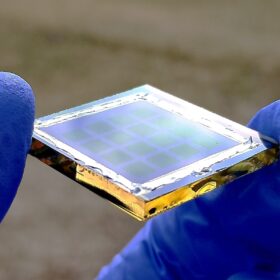
Swedish scientists build bifacial chalcogenide solar cell with 15.1% efficiency
Researchers in Sweden developed a bifacial chalcoprite solar cell using a titanium-doped indium oxide (ITiO) back contact, achieving 68% bifaciality. The device is able to maintain strong front-side performance with around 15% efficiency, 595 mV open-circuit voltage, and 75% fill factor.”
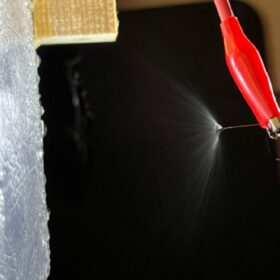
Electrospray cooling can boost PV panel performance with minimal water use
Researchers in Turkey optimized electrospray cooling for PV panels, achieving optimal power output with minimal water use and a compact, energy-efficient setup. Their study identified irradiance, flow rate, voltage, and nozzle distance as ideal parameters.
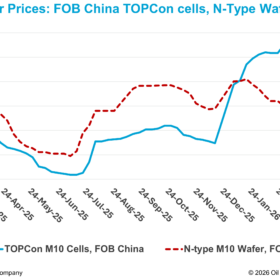
China solar cell prices fall for third consecutive week as upstream costs ease
In a new weekly update for pv magazine, OPIS, a Dow Jones company, provides a quick look at the main price trends in the global PV industry.

Hysolar moves to take control of Suntech
Hongyuan Green Energy (Hysolar) says it plans to take control of Wuxi Suntech Solar Power through a court-led restructuring that transfers core assets into a new entity while isolating legacy debt.
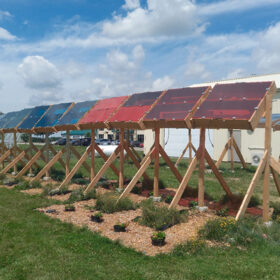
Agrivoltaics for turnips
Researchers in Canada found that semi-transparent cadmium telluride and low-transparency crystalline silicon solar panels can boost turnip root and leaf yields in agrivoltaic systems by optimizing light quality, distribution, and heat stress. Their study highlights that PV module type, transparency, and spectral transmission must be carefully matched to plant physiology to maximize both crop productivity and renewable energy generation.
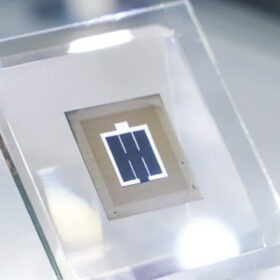
JinkoSolar achieves 32.76% efficiency in perovskite-TOPCon tandem solar cell
The result was certified by China’s National Photovoltaic Industry Metrology Test Center (NPVM). The cell utilizes a perovskite top device with MBT-ligand-controlled crystallization on a TOPCon silicon bottom cell, achieving a void-free, high-efficiency tandem structure.
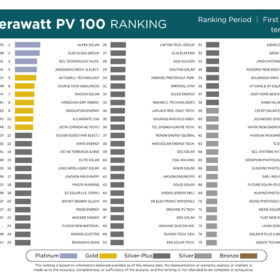
Who are the Top 100 PV manufacturers today?
The Terawatt PV 100 ranks the top 100 solar manufacturing companies using a new methodology based on production scale, financial strength, and corporate transparency, with Tongwei leading the Q1 2026 list and most top firms headquartered in China. The analysis highlights increasing global supply-chain scrutiny driven by tariffs and ESG mandates, while also showing rising influence from Indian companies and strong positions for key materials and equipment suppliers.
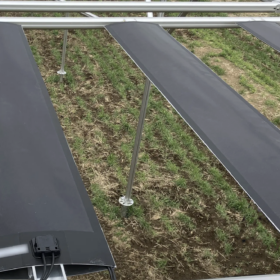
Sekisui-led consortium testing film-type perovskite solar for agrivolatics
A Japanese consortium is piloting agrivoltaics using film-type perovskite solar cells over rice paddies to study energy generation alongside crop production. The three-year project will assess impacts on rice yield, land use, and emissions while testing the technology’s performance and commercial viability.

Smart meters are vulnerable gateways to cyberattacks
Researchers found that widely deployed smart meters pose a “massive” cybersecurity risk, potentially enabling data manipulation, energy theft, and service disruption. They propose a new detection method using state estimation and statistical boundaries to more accurately identify cyberattacks, outperforming traditional techniques despite higher computational demands.

Waaree approves INR 39 billion solar glass factory investment
Waaree Energies has approved a capital expenditure of INR 39 billion ($415 million) to build a solar glass manufacturing facility with a capacity of 2,500 metric tons (MT) per day through its subsidiary Waaree Green Glass.
