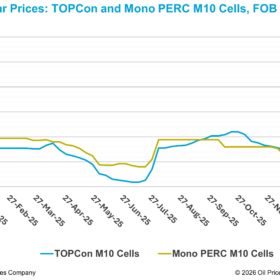
TOPCon cell prices rise for fourth week amid elevated silver costs and export rebate uncertainty
In a new weekly update for pv magazine, OPIS, a Dow Jones company, provides a quick look at the main price trends in the global PV industry.
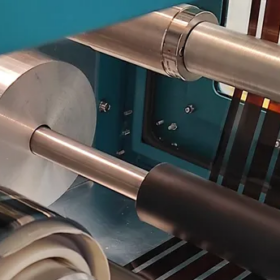
Power Roll testing new metrology for perovskite solar
The UK-based perovskite solar PV specialist has announced a new metrology research project with Swansea University and a new development agreement with Renolit, a German plastic films, sheets and polymer solutions company.

Korean scientists boost performance of tin monosulfide cells with new post-treatment
Researchers in South Korea improved the performance of tin monosulfide (SnS) solar cells with a potassium fluoride-assisted post-treatment and a vapor transport deposition process. The treated solar cells had a power conversion efficiency of 4.10% and reduced recombination sites, compared to 3.42% for untreated devices.

A closer look at Tesla’s new residential solar panels
The new Tesla Solar Panel and mounting system pairs with the company’s inverter, Powerwall battery, EV charging and vehicles, creating an all-Tesla residential solar offering for the first time.
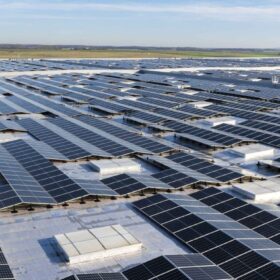
France’s largest rooftop solar project begins construction
The largest single-unit rooftop solar power plant in Europe, developed by French independent power producer Urbasolar, is under construction on the Delta 3 multimodal logistics platform in Dourges, in France’s Hauts-de-France region.
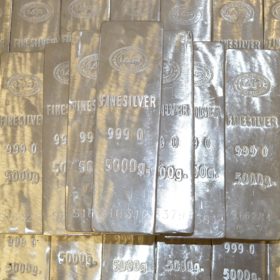
Silver price surge shows no signs of slowing, hitting a new all-time high of $117.66 per ounce
Silver hit a new all-time high of $117.66/oz, climbing over 40% in the past month and 275% in the past year, driven by dollar weakness, geopolitical tensions, and gold’s strong momentum. Silver analyst Matthew Piggott tells pv magazine the metal may reach $130/oz within a couple of weeks.
Nissan wheels out solar-powered vehicle
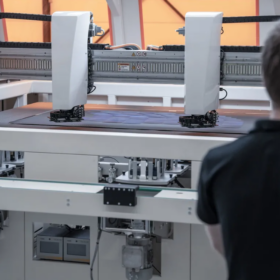
The Ariya demonstration vehicle features 3.8 m² of Lightyear’s custom solar panels integrated across the hood, roof, and tailgate. Testing showed that the car could generate 0.5 kWh of solar energy during a 2‑hour, 80 kilometer trip, delivering up to 3 kilometers of range at no extra cost or charging time.

Korean scientists build mini perovskite solar module with 22.56% efficiency
GIST researchers have developed a perovskite mini-module with 22.56% efficiency by improving the SnO₂ electron transport layer with PEI, reducing defects and electron loss. The module retained 94% of its performance after 500 hours, highlighting potential for scalable, stable perovskite solar cells and modules.

Flexible perovskite solar cells with tunable color, transparency
Researchers at Hebrew University of Jerusalem have demonstrated 9.2% efficient printable semi-transparent, flexible halide perovskite solar cells with tunable color and transparency.
New hydrogel layer tackles solar module hotspots
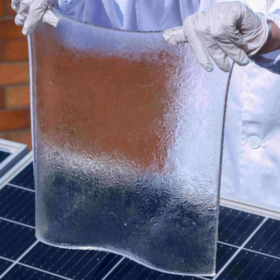
A team of scientists has developed a novel hydrogel solar panel coating that is reportedly capable of lowering hot spot temperatures by up to 16.2 C, outperforming conventional hydrogels. The hydrogel also demonstrated superior durability and improved power output by up to 13%, according to the research group.
