
Bulgaria gives green light to solar cell, panel factory
The Bulgarian government has approved a memorandum of understanding with Turkey’s Smart Solar Technologies AD for the construction of a solar cell and panel factory in southern Bulgaria.

Automating solar PV perovskite material discovery
U.S. researchers have applied robotics and automation to perovskite material discovery for use in tandem perovskite solar cell technologies. The robotic platform is multifunctional, able to mix precursors, perform spin coating, annealing and characterization of the optoelectronic thin films.

Nanoparticles, phase-change materials in PVT systems
Scientists have used varying levels of Al₂O₃ and ZnO paraffin wax to improve the electrical and thermal performance of a photovoltaic-thermal (PVT) system. They have also developed a prediction model for this specific combination of hybrid nano-phase change materials.
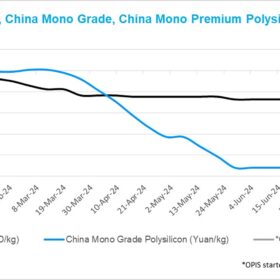
Global polysilicon prices stable amid steady fundamentals
In a new weekly update for pv magazine, OPIS, a Dow Jones company, provides a quick look at the main price trends in the global PV industry.

How much shade is enough?
Researchers have covered part of a rooftop solar plant with a different numbers of shading cloth layers to measure their power, current, and voltage. They have been able to identify a point after which the value of system current and maximum power is no longer sensitive to shading heaviness.
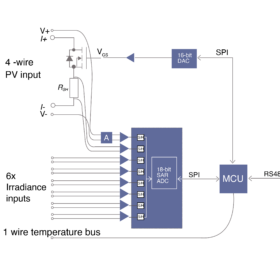
Monitoring system for vehicle-integrated photovoltaics
Researchers in Slovenia have built a monitoring system for vehicle-integrated photovoltaics consisting of an IV curve scanner that uses a MOSFET as a voltage-controlled electronic load. The system also utilizes an 18-bit analog-to-digital converter and a microchip microcontroller.
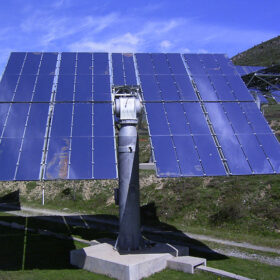
Heliostat field-integrated PVT system supported by organic PCM
Scientists have used stearic acid and a combination of stearic acid and carbon black to increase thermal conductivity in a photovoltaic-thermal system linked to a heliostat field concentrator. From a temperature of 30 C at the inlet, they were able to heat the water to up to 59 C.
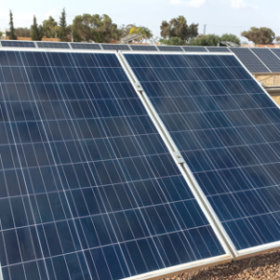
New research finds solar module anti-reflective coatings may reduce LCOE by over 2%
Researchers in Morocco have examined the effects of an anti-reflective coating on solar panel performance under desert conditions and have found that it enhanced both the annual performance ratio and the energy yield by 2% and 5.5%, respectively. They have also found it to be durable and able to withstand dry cleaning methods under accelerated testing.

The impact of semi-transparent solar modules on agrivoltaics yield
Researchers have conducted a field study across two growing seasons, growing different kinds of vegetables under three types of modules with 40%, 5%, and 0% transparency. Their work is the first replicated research experiment that evaluates module transparency in an irrigated vegetable field setting.
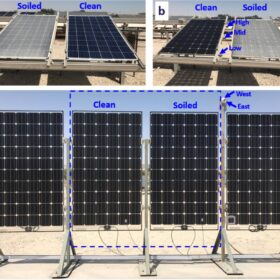
East-west vertical PV as an antidote for soiling in desert climates
New research from Qatar shows that east-west-oriented vertical PV installations can significantly help reduce soiling in desert climates. The scientists found that PV power generation can be up to 9% higher in vertical systems compared to conventional arrays.
