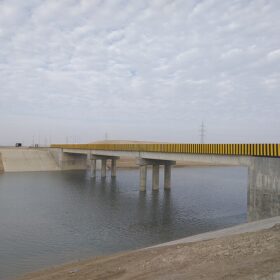
Canal-top PV for Afghanistan’s massive irrigation project
A team of scientists has simulated covering 20% of the Qush-Tepa irrigation canal with PV panels. To this end, the researchers developed a framework, termed an integrated techno-economic-environmental assessment, that can be applied elsewhere. “It explicitly quantifies energy production, water-evaporation reduction, land-use savings, and economic performance within a single analytical structure,” one of the researchers said.
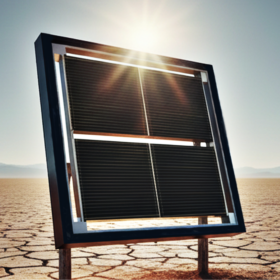
Researchers achieve record perovskite solar module stability under light, heat, and UV stress
An international research team has developed a new two-dimensional perovskite interlayer based on a co-crystal engineering strategy for more robust perovskite films. It demonstrated improved performance in small area perovskite solar cells and, in a 48 cm2 module, contributed to retain 95% of initial efficiency after 5,000 h.
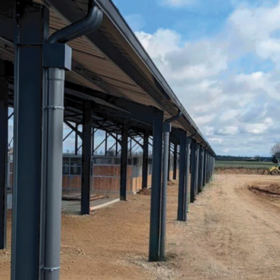
High-capacity gutter for efficient solar panel drainage
French company Dal’Alu has developed a high-capacity aluminum gutter designed to efficiently collect and channel rainwater from large roofs and solar panels. Its on-site profiling, modular components, and durable construction reportedly ensure rapid installation, long-term performance, and compliance with current building standards.
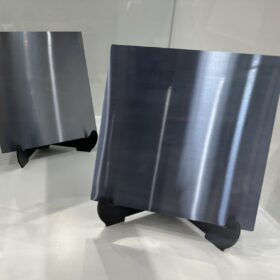
OCI Holdings begins manufacturing operations at 2.7 GW wafer factory in Vietnam
The facility will produce solar wafers for the U.S. market.
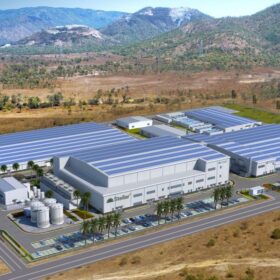
Stellar reveals scale of 2 GW solar ingot and wafer manufacturing plant
Plans to establish Australia’s first commercial-scale solar ingot and wafer manufacturing plant near Townsville in north Queensland are advancing with developer Stellar PV providing an early glimpse of the proposed 2 GW facility.
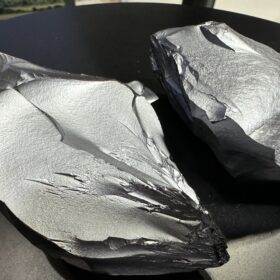
China extends anti-dumping duties on solar-grade silicon from US, South Korea
The duties range from 53.3% to 57% for U.S. producers and from 2.4% to 48.7% for South Korean companies and will remain in force for a further five years.

Tongwei unveils 770 W TOPCon PV module with 24.8% efficiency
The Chinese manufacturer unveiled its new TOPCon bifacial TNC3.0 module at WFES 2025. The 1,500 V, IP68-rated panel offers over 85% bifaciality, a 0.26%/C temperature coefficient, and a 30-year warranty guaranteeing 88.85% output.
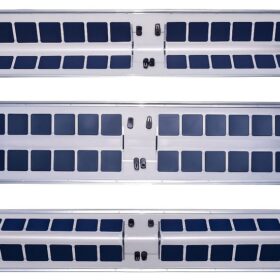
Mirai Solar develops lightweight solar panel for agrivoltaics
While completing pilot projects in the U.S. and Europe, Mirai Solar has certified its lightweight PV module designed to work as a shade screen in agrivoltaics applications, such as greenhouses.

Solar module prices lagging behind soaring silver costs
Solar manufacturers are facing rising cost pressure as silver paste now accounts for up to 30% of total cell production costs. OPIS analyst Hanwei Wu tells pv magazine that module producers currently have limited ability to raise panel final prices, which is accelerating efforts to reduce silver use across all mainstream cell technologies.
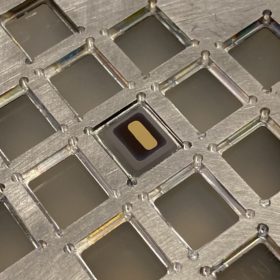
Chinese scientists push selenium solar cells beyond 10% efficiency
Researchers at the Chinese Academy of Sciences have set a world record for selenium solar cells, achieving 10.3% efficiency for the first time above the 10% threshold. The breakthrough was enabled by optimized charge-selective contacts, light-driven crystallization, and post-deposition annealing, producing stable devices with a 1.03 V open-circuit voltage.
