
Kalpana Systems launches roll-to-roll spatial atomic layer deposition tools
Kalpana Systems, a Dutch equipment manufacturer, is launching spatial atomic layer deposition (sALD) tools to be used in roll-to-roll manufacturing processes in the solar PV, organic light emitting diode, battery and packaging industries. The initial application is expected to be barrier layer deposition.

SEG Solar opens 2 GW module factory in Texas
SEG Solar has invested $60 million in a new solar module factory in Houston, Texas.

Typhoon, monsoon, record heatwave impacted irradiance across Asia in July
In a new weekly update for pv magazine, Solcast, a DNV company, reports that diverse weather conditions in July resulted in varying irradiance levels across Asia. While a typhoon in the Philippines and a monsoon in India had a negative impact on irradiance, a strong subtropical ridge saw China and Japan record their warmest July on record.
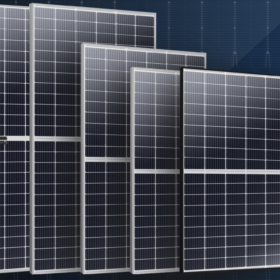
Sinovoltaics updates map of European solar module manufacturing sites
The latest report on the supply chain for European PV module production provides the status of 121 solar manufacturing sites, including closures and capacity on hold. It maps plants that produce PV modules, cells, wafers, ingots, polysilicon, and metallurgical-grade silicon.
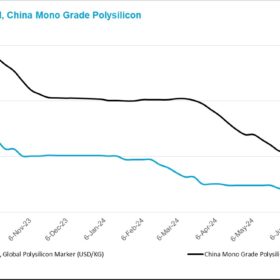
Polysilicon prices stable, futures listing opens possibilities in China
In a new weekly update for pv magazine, OPIS, a Dow Jones company, provides a quick look at the main price trends in the global PV industry.
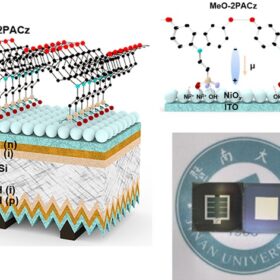
Perovskite-silicon tandem solar cell based on hybrid interconnecting layers achieves 28.47% efficiency
An international research team has designed a two-terminal perovskite-silicon tandem solar cell that utilizes new hybrid interconnecting layers to reduce recombination losses in the top perovskite device. The tandem cell achieved an impressive fill factor of 81.8%, which the scientists said is the highest value ever reported for this cell technology to date.

PV industry faces consolidation, says JinkoSolar
JinkoSolar has begun converting its production to n-type tunnel oxide passivated contact (TOPCon) products to stay competitive, says Frank Niendorf, the company’s general manager for Europe. He predicts that several market players in the value chain will exit the market soon.

Radiative cooling tech based on polydimethylsiloxane film increases PV module generation by up to 3.72%
Scientists in China have proposed to use polydimethylsiloxane films doped with soda glass to reduce solar module temperature. The coating achieved solar transmittance of 94.8% and sky window emissivity of 95.3%.
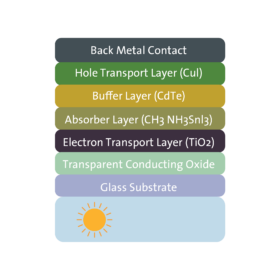
Improving perovskite solar cell performance with cadmium telluride buffer layer
An international research team has conducted a series of simulations to investigate how a cadmium telluride buffer layer may help increase efficiency and stability in perovskite solar cells. Their experiment showed that cell efficiency may climb from 11.09% to 23.56%.
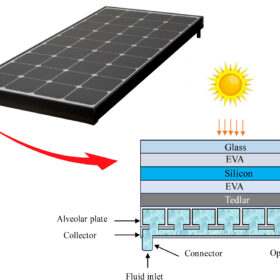
Photovoltaic-thermal panel based on channel-box heat exchanger
Scientists in Morocco have conceived a photovoltaic-thermal panel that uses a channel-box heat exchanger consisting of 94 channels attached directly to the PV module. The simulated design reportedly results in an overall panel efficiency of over 90% and good results in terms of temperature inhomogeneity.
