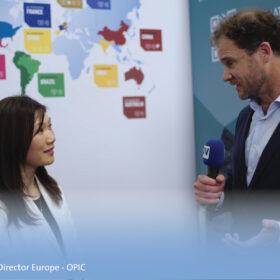
‘They are all selling below their cost prices’
In the second interview in a series held at Intersolar 2024, pv magazine spoke with Karen Tang, editorial director for Europe at US-based global energy price reporting agency OPIS, about the strong pressure on prices across all segments, including the downstream business. She defined the current market situation as “unhealthy” and “bleak” for the PV industry, although she acknowledged that overcapacity is also making solar extremely competitive compared to all other energy sources. Tang also expects pressure on electricity and gas prices to continue this year.
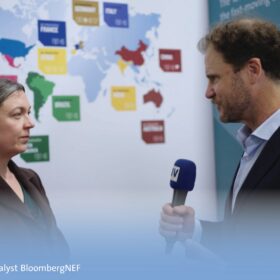
‘In the next year, some of these guys are going to be bankrupt’
At Intersolar in Munich, pv magazine spoke with Jenny Chase, solar analyst at BloombergNEF, about the incredibly low polysilicon prices, massive overcapacity, and increasing consolidation. According to Chase, this year there will be enough polysilicon capacity to produce 1.1 TW of solar modules, but global module demand is expected to reach around 585 GW. “That is a pretty huge delta,” she said, noting that the solar industry should also prepare for a series of “negative feedback mechanisms,” such as negative prices and excess of solar power.
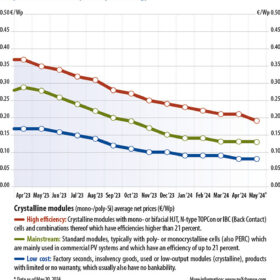
Low prices for TOPCon solar panels put pressure on PERC
In May 2024, high-efficiency panels, predominantly glass-glass modules equipped with tunnel oxide passivated contact (TOPCon) cells began to converge on price with mainstream offerings, writes Martin Schachinger, of pvXchange. Production volumes for these negatively-doped, “n-type” cells and modules have been ramped up in China while the increasingly restrictive customs situation in the United States may already be having an impact. For the European market, ever-lower prices for the latest module technology would suggest that demand would continue to rise were it not for a number of disruptive factors.
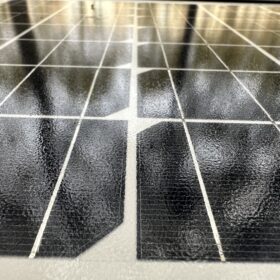
Reducing PV module temperature with cooled air from the ground
Researchers from Iraq have used computational fluid dynamics to simulate the operation of a 100 W panel with ground cooling. The proposed technique was reportedly able to reduce panel temperature by up to 28%, with power generation increasing by up to 6.5%.

ChatGPT can tell scientists how to build better perovksite solar cells, research says
An international research group has sought to build for the first time a perovskite solar cell with the help of ChatGPT. The experiment helped the scientists identify a series of materials for the cell composition and the results were cells with a higher power conversion efficiency compared to that of reference cells built without the material proposed by the large language model.

Chinese researchers build kesterite solar cell with certified efficiency of 14.2%
The solar cell was treated with multi-elemental alloying, which reportedly helped eliminate defects in the kesterite absorber, thus increasing cell efficiency. China’s National PV Industry Measurement and Testing Center confimed the results.
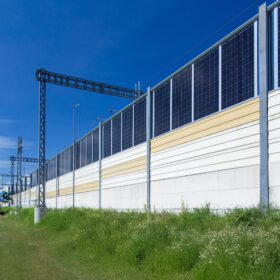
Lithuania testing bifacial PV in noise barriers
Two pilot projects are integrating PV into noise barriers, one alongside a railway near Vilnius, and the other along the national E5 highway connecting the cities of Kaunas and Vilnius.

Spontaneous glass breakage on solar panels on the rise
The National Renewable Energy Laboratory noted an increase in spontaneous glass breakage in solar panels. The PV Module Index from the Renewable Energy Test Center investigates this and other glass-related trends in solar manufacturing.
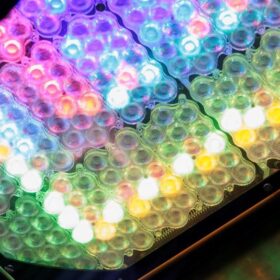
Wavelabs unveils solar simulator for perovskite mini-modules
Wavelabs, a German testing equipment manufacturer. unveiled a new solar simulator suitable for perovskite and thin film mini-modules.
Chinese customs seize PV modules suspected of intellectual property infringement
The detained panels were shipped by Canadian Solar and Sunova Solar to Europe and Latin America, respectively. The total value of the seized products amounts to over CNY 5 million.
