2022 review in trends: Modules (Part II)
N-type technology’s shift to the mainstream of PV production was a major development in solar cell and module manufacturing in 2022. Manufacturers added TOPCon and HJT capacity and racked up efficiency milestones in the process.
2022 review in trends: Modules (Part I)
The move to n-type technology in mainstream PV production was a major development in PV cell and module manufacturing in 2022. Manufacturers added TOPCon and HJT capacity and racked up efficiency milestones in the process.
Weekend read: Navigating hailstorms
Owners and insurers suffered record hail losses in 2022. John Sedgwick, president of engineering advisory VDE Americas, provides some pro tips for mitigating such risks.
Chinese PV Industry Brief: Trina to supply 875 MW of trackers for Qatar solar plants
Trina Solar has signed an 875 MW tracker supply deal with Samsung C&T for Qatar’s new “IC Solar” project, while Chint said it aims to sell up to 8 GW of residential PV assets by the end of 2023.
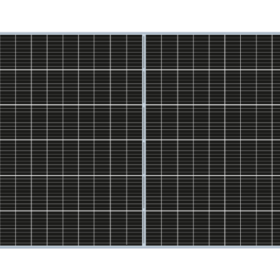
Sunbond unveils 550 W mono PERC modules
India’s Sunbond Energy has developed new mono PERC modules built with 144 half-cut M10 cells and 10 busbars. They are available in power outputs ranging from 520 W to 550 W, with efficiencies of 19.83% and 21.23%.

Adani becomes India’s sole producer of large monocrystalline silicon ingots
Adani Solar has started producing large monocrystalline silicon ingots for M10 and G12 wafers. It is targeting 2 GW of ingot and wafer capacity by the end of 2023 and 10 GW by 2025.

New process increases efficiency of CIGS bifacial thin-film solar cells
Researchers from the Swiss Federal Laboratories for Materials Science and Technology (Empa) have developed a new low-temperature production process for bifacial thin-film solar cells based on copper indium gallium diselenide (CIGS). It resulted in record yields of 19.8% for front lighting and 10.9% for rear lighting.
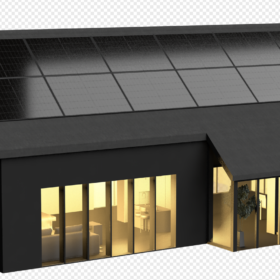
DAS Solar unveils n-type bifacial glass-glass module for residential PV
Chinese module manufacturer DAS Solar has launched an all-black bifacial glass-glass module series with an output of 410 W to 430 W. The new series features efficiencies of up to 22% and a temperature coefficient of -0.3% per degree Celsius. The company is offering a 15-year product warranty and a 30-year power warranty for 87.4% of the initial yield.

BVG to set up 2 GW solar module fab in India
Bharat Vikas Group (BVG) says it will build a 500 MW, fully automated PV module production line in India, with plans to eventually expand it to 2 GW.

Cooling down photovoltaic panels with concrete
Scientists in Italy have proposed the use of radiative coolers made of cementitious materials to reduce the operating temperature of solar panels. The novel system configuration consists of a stack made by a reflector, a cement-based radiative cooler, and a bifacial solar cell.
