
Chinese PV Industry Brief: Shenzhen Energy to start PV-powered hydrogen production
Shenzhen Energy has announced plans to build a green hydrogen facility in Inner Mongolia, and Daqo has secured another polysilicon supply deal. DKEM, meanwhile, has unveiled plans to build a silver paste production facility for TOPCon products.
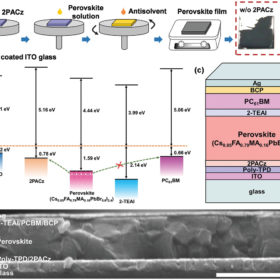
Inverted perovskite solar cell with 21.85% efficiency via surface modulator
A UK research group has used surface modulators to reduce non-radiative recombination in perovskite solar cells. They used 2-TEAI organic halide salt to build a cell with high power conversion efficiency and stability.
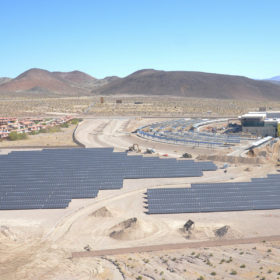
New standardized guidelines for solar O&M
IEA-PVPS has standardized guidelines for O&M programs for large-scale solar plants. It defines O&M performance indicators and standard O&M operator services, as well as tools to analyze PV plant performance and safety.

IBC solar modules may drive TOPCon out of market by 2028, says tech expert
Radovan Kopecek, an expert on interdigitated back-contacted (IBC) tech, says that IBC solar panels could capture more than 50% of the global market by 2030, potentially pushing TOPCon products out of competition. He told pv magazine how this transition might materialize and discussed the tech advancements that could make it possible.
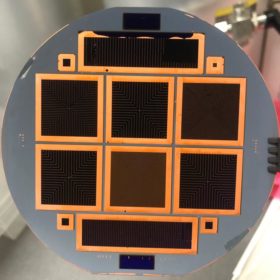
Silicon heterojunction solar cell with 23.83% efficiency via molybdenum oxide hole collector
Dutch scientists have achieved a record-breaking efficiency for a silicon heterojunction solar cell fabricated with a hole collector based on a molybdenum oxide (MoOx). They used plasma treatments to increase the presence of oxygen in the MoOx layer, to improve its electronic properties.
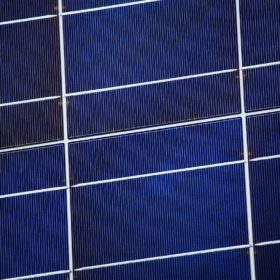
US solar modules 107% more expensive without global supply chains
Researchers say that from 2008 to 2020, the globalization of solar module manufacturing saved $67 billion for US, German, and Chinese solar installers, even though it was dominated by Chinese investment.
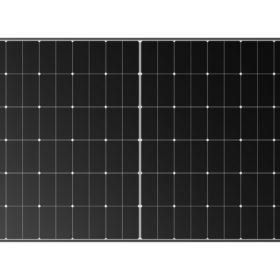
Longi launches all new back contact module, promising 22.8% efficiency
Longi has launched a series of modules featuring an all-new hybrid passivated back contact cell technology, with which it claims a maximum module efficiency of 22.8% in mass production. It will initially offer the modules in 54, 60, 66 and 72 cell formats, targeting rooftop and distributed generation applications.
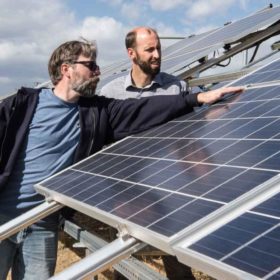
PV modules with longer lifetimes could slash demand for materials, says NREL
The US National Renewable Energy Laboratory (NREL) says in a new report that PV module lifetime extensions should be prioritized over closed-loop recycling to reduce demand for new materials.
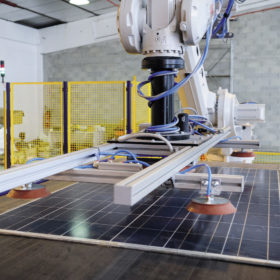
Recycling key to solar sustainability
A new study of the environmental impacts of renewable energy finds significant opportunities for solar to reduce its impacts in various categories, including human health, resource depletion, and environmental damage. The study notes in particular that more work is needed to establish a comprehensive reuse and recycling network for end-of-life PV products.
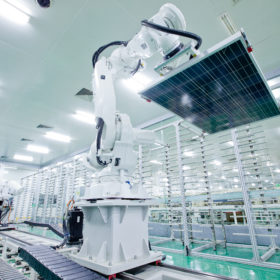
Jinko Solar reports higher sales, profit in Q3
Jinko Solar recorded a higher profit in the third quarter of 2022, as sales of its solar panels surpassed 10 GW. The Chinese PV module manufacturer said it now wants to ramp up production to keep pace with rising global demand.
