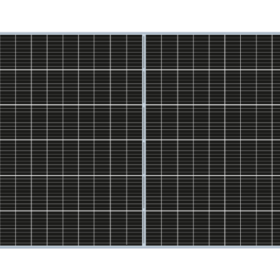
Sunbond unveils 550 W mono PERC modules
India’s Sunbond Energy has developed new mono PERC modules built with 144 half-cut M10 cells and 10 busbars. They are available in power outputs ranging from 520 W to 550 W, with efficiencies of 19.83% and 21.23%.
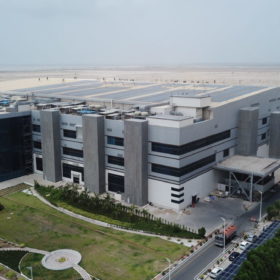
Adani becomes India’s sole producer of large monocrystalline silicon ingots
Adani Solar has started producing large monocrystalline silicon ingots for M10 and G12 wafers. It is targeting 2 GW of ingot and wafer capacity by the end of 2023 and 10 GW by 2025.

New process increases efficiency of CIGS bifacial thin-film solar cells
Researchers from the Swiss Federal Laboratories for Materials Science and Technology (Empa) have developed a new low-temperature production process for bifacial thin-film solar cells based on copper indium gallium diselenide (CIGS). It resulted in record yields of 19.8% for front lighting and 10.9% for rear lighting.

DAS Solar unveils n-type bifacial glass-glass module for residential PV
Chinese module manufacturer DAS Solar has launched an all-black bifacial glass-glass module series with an output of 410 W to 430 W. The new series features efficiencies of up to 22% and a temperature coefficient of -0.3% per degree Celsius. The company is offering a 15-year product warranty and a 30-year power warranty for 87.4% of the initial yield.
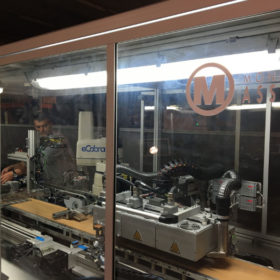
BVG to set up 2 GW solar module fab in India
Bharat Vikas Group (BVG) says it will build a 500 MW, fully automated PV module production line in India, with plans to eventually expand it to 2 GW.

Cooling down photovoltaic panels with concrete
Scientists in Italy have proposed the use of radiative coolers made of cementitious materials to reduce the operating temperature of solar panels. The novel system configuration consists of a stack made by a reflector, a cement-based radiative cooler, and a bifacial solar cell.

CubicPV plans 10 GW of conventional silicon wafer production
CubicPV, backed by $26 million in new funding, has announced plans to make silicon wafers in the United States, which would fill a critical gap in the US solar supply chain.

Adani moves forward with 30,000 MT polysilicon project in India
Adani has selected Engineers India Ltd. (EIL) to set up 30,000 metric tons (MT) of polysilicon production capacity and 500 MT of monosilane capacity in India.
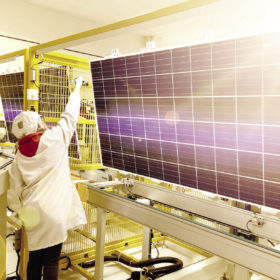
Canadian Solar enters TOPCon solar module business
Canadian Solar said it will begin mass production of 690 W TOPCon products in the first quarter of 2023. The modules will feature a cell efficiency of 25.0% and a bifaciality factor of more than 85%.

Tracking environmental performance improvements in solar modules
New life-cycle assessment (LCA) data for PV systems confirms that greenhouse gas emissions from 1 kWh of solar electricity are far lower than emissions from fossil-fuel power plants. The difference has been fairly constant since 2018, but has improved substantially since when IEA PVPS started reporting on this measure in 1996.
