
Chinese poly maker says its granular silicon will be in demand when EU puts up carbon border
GCL-Poly, in its annual results statement for 2021, has pointed to certification of its product’s low-carbon claims by French government body the Agence de l’Environnement et de la Maîtrise de l’Energie.
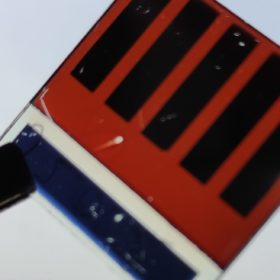
Tin perovskite solar cell with operational stability of over 1,300h
Scientists in Spain have built a 10.61%-efficient tin perovskite solar cell with improved open-circuit voltage and stability. The device was fabricated with formamidinium tin iodide (FASnI<sub3), sodium borohydride (NaBH4) as a reducing agent, and a bulky secondary ammonium cation of small size known as dipropylammonium iodide (DipI).

Ultrathin photovoltaic silicon membrane with 65% light absorption
A Dutch-British research group is developing a 1μm crystalline silicon membrane with a remarkable optical performance and a hyper-uniform pattern design. A simulation of the device was theoretically able to achieve an absorption equivalent photocurrent of 26.3mA/cm2.
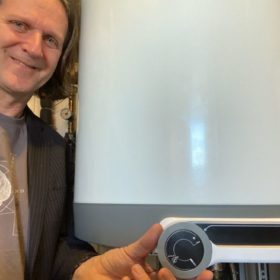
New solar-powered boiler from Germany
Timo Leukefeld GmbH has started offering a decentralized water-heating solution with capacities ranging from 125 liters to 200 liters.
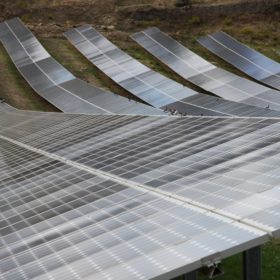
Chinese PV Industry Brief: It’s boom time for solar in the world’s PV capital
Big numbers from polysilicon and cell maker Tongwei and the latest government statistics indicate the nation is in the midst of a flood of solar capacity additions at the moment.
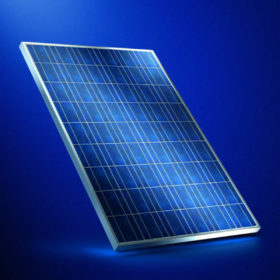
Schüco publishes warning due to potentially defective solar module backsheets
The PV manufacturer says there is a risk of electric shock in some of its solar modules due to defective polyamide backsheets. Products delivered between 2010 and 2012 are affected. According to Schüco, they should be uninstalled and disposed of.
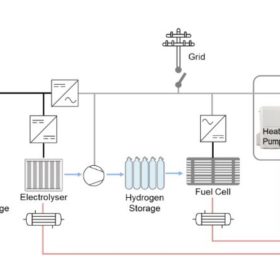
Designs for solar+storage+hydrogen systems in buildings
German scientists have tried to determine whether a PV system linked to a small electrolyzer, a fuel cell, and lithium-ion batteries could fully power a grid-connected household. Their new proposal consists of a 6.8kW PV array, a 5kW electrolyzer, a 1.24kW fuel cell system, and battery storage.

US government to move forward with PV anti-circumvention investigation
The announcement of a new anti-circumvention investigation brings the US solar industry closer to what has been described as a worst-case scenario for companies that account for 80% of the country’s solar cell imports, with no domestic manufacturing capacity to alleviate the pressure.
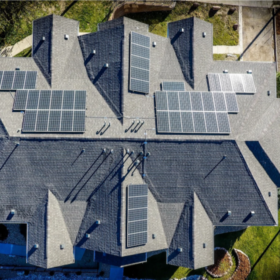
IntriEnergy secures solar patent in India
US-based IntriEnergy has secured a patent for its PV cell tech platform that can increase the energy output of solar panels by up to 60% without increasing the panel size.

The sun is still shining on poly makers but solar developers struggling in China
Polysilicon maker Xinte is forging ahead with a huge expansion strategy just as solar developers at the opposite end of the industry continue to bleed cash.
