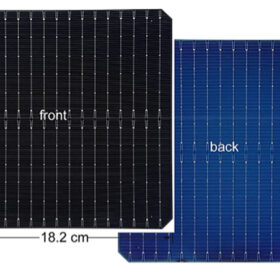
Discovery of passivating pinholes in TOPCon solar cells paves the way for higher efficiencies
DAS Solar and Hebei University have identified two types of pinholes in TOPCon solar cells: harmful recombinational pinholes, which lack oxygen and cause carrier recombination, and beneficial passivating pinholes, which retain oxygen to enable efficient tunneling while maintaining interface passivation. Their work shows that optimizing oxide layer formation, back-surface polishing, and polycrystalline silicon deposition can increase passivating pinholes, boosting device efficiency and guiding industrial cell design.
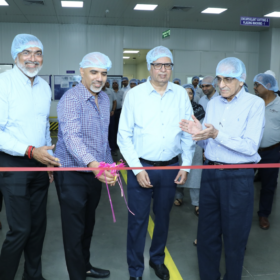
RenewSys inaugurates 3 GW solar module plant in India
RenewSys India has opened a 3 GW automated solar module facility in the Indian state of Maharashtra, expanding total module capacity to 5.6 GW.

DMEGC launches 475 W full-black solar module
The Chinese manufacturer said its new rooftop solar module offers 455–475 W power, 22.8–23.8% efficiency, 96-cell double-glass design, and IP68 protection.

Dutch startup plans roll-to-roll factory for perovskite solar cells
TNO has launched Perovion Technologies to industrialize lightweight, flexible perovskite solar cells, targeting niche applications where conventional panels are unsuitable. The company plans to build the first roll-to-roll perovskite solar cell manufacturing facility in the Netherlands by 2030.

Arctech presents dry cleaning robot weighing just 38 kg
The Chinese manufacturer said its new Star Shine I system is already available in Europe and can operate at speeds of 10–18 m/min, performing cleaning routes of up to 3 km round trip and 9 km in a single direction.
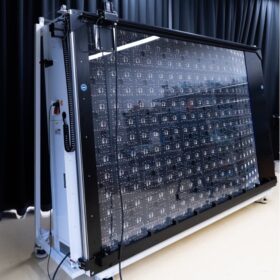
Ciemat unveils large-area multispectral solar simulator for PV module testing
The system enables measurements under controlled irradiance, spectrum, and temperature conditions. It can combine 0.4% spatial irradiance uniformity, 500 ms illumination pulses, and dynamic I-V acquisition to accurately test high-capacitance photovoltaic modules in a single pulse, according to Ciemat.

Is Switzerland going back contact?
In 2025, back-contact solar modules from Aiko Solar and Longi accounted for more than 50% of the Swiss market, driven by strong demand for high-efficiency rooftop PV systems, according to a new report by Eturnity and the Bern University of Applied Sciences.

Austria could harness 90 TWh of agrivoltaics using 5–16% of cropland
Austrian researchers conducted a techno-economic analysis of agrivoltaic systems and found that 5%–16% of the country’s cropland would be required to meet its solar electricity targets.
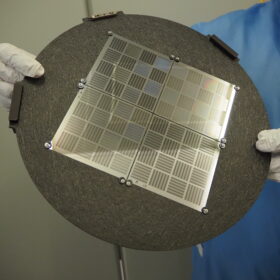
Nanostructured silicon could push solar cells beyond Shockley–Queisser limit
The LEEMONS project is researching nanostructured silicon that uses low-energy electron multiplication (LEEM) to allow one high-energy photon to generate multiple electrons, reducing energy losses in solar cells. By creating ultra-thin amorphous silicon layers inside crystalline silicon via ion implantation, the scientists aim to boost solar cell efficiency beyond the Shockley–Queisser limit while keeping compatibility with existing manufacturing methods.
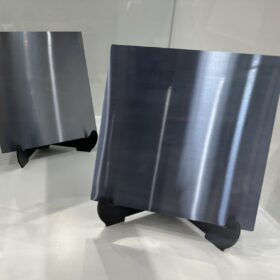
Chinese PV Industry Brief: Wafer prices fall on weak demand
The China Nonferrous Metals Industry Association (CNMIA) says polysilicon and wafer prices continued to fall this week, with n-type re-feed and dense polysilicon down 6.39% and 6.42% to an average of CNY 45,200/ton ($6,240).
