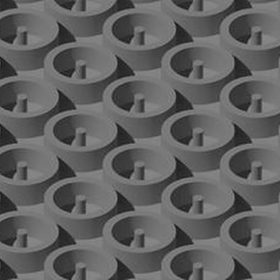
Subwavelength antireflective structure for thin-film solar cells
Consisting of a two-dimensional (2D) array of rings and pillars, the structure can improve the short-circuit current of a thin-film crystalline solar cell by over 50%, its creators say. The subwavelength AR structures are robust to certain degrees of fabrication errors, they add.
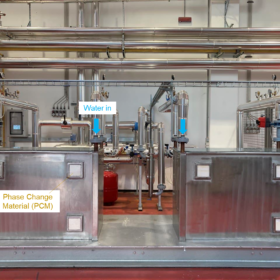
Latent heat thermal storage with PV for nearly zero-energy buildings
Researchers in Italy are combining PV with latent heat thermal storage (LHTM) and other renewable energy sources to maximize clean energy consumption in buildings. The 47kW PV array and LHTM system work independently, but the scientists said that a heat pump could be used to link them.

Another anti-circumvention case filed in the US against Southeast Asian countries, said ROTH
Auxin Solar filed the anti-circumvention petition against Vietnam, Malaysia, Thailand, and Cambodia, said an industry note from Philip Shen, managing director at ROTH Capital Partners.
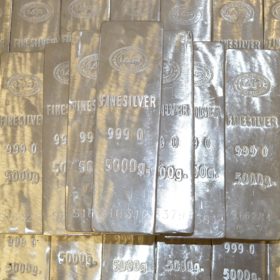
Average silver price expected to drop 1% to $24.80 per ounce this year
According to the Silver Institute, global industrial silver demand is expected to grow 8% this year due to strong demand in all key sectors, including the PV industry.

Soluna unveils 1.28 kWh portable power generator
Soluna’s new generator can be combined in a two-unit system to reach a capacity of 2.5kWh. It features built-in 120V(AC) output, continuous AC output power of 1,200W, and peak output of up to 2,400W.

Small-area, colored perovskite BIPV module with 13.9% efficiency
Through a conventional coloring technique for crystalline solar modules, scientists in Germany were able to manufacture a colorized small perovskite solar module in white marble optic displays that maintains up to 88.5% of the efficiency it had before coloring. The device was built with five cells interconnected in series and has a total area of 9cm2.

Making the case for perovskite quantum dots
Quantum dots, a type of semiconductor based on tiny nanometer sized particles, are a cause for excitement in many disciplines thanks to their unique electronic properties. In solar cell technology, quantum dots fabricated from perovskites could have several advantages over more commonly researched “bulk” perovskite materials, and researchers are beginning to take note of these. A group of scientists in China evaluated recent progress in perovskite quantum dot solar cells, noting both strong potential and a long way to go for this early-stage technology.

‘Solar and wind deployment could not now be stopped if we wanted to’
BloombergNEF’s Jenny Chase has surveyed the state of affairs in world solar for clean energy journal Joule and said the technology’s historic ability to surmount obstacles – and persistently confound analysts’ predictions – should offer a reason for hope.
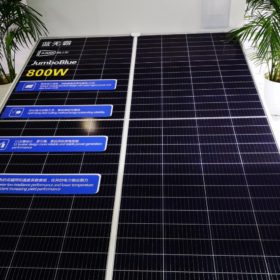
Chinese PV Industry Brief: JA Solar increases production capacity in Vietnam, IDG Energy enters solar business
JA Solar is expected to put another 3.5GW of cell capacity into operation by the end of June and Hong Kong-based IDG Energy Investment will venture into cell manufacturing by establishing a “foreign invested” project company.

Hyundai enters heterojunction PV module business
Hyundai wants to use a partnership with South Korean PV equipment supplier Jusung Engineering to commercialize solar modules based on 24.45%-efficient heterojunction solar cells.
