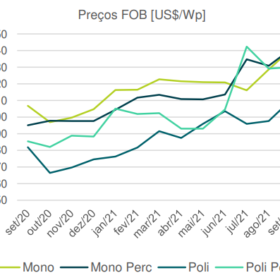
PV module import prices up by 20% in Brazil since last December
Brazilian consultancy Greener reports that monocrystalline PERC modules are currently being sold at an average price of $0.24/W in the Brazilian PV market, but prices may keep rising, possibly into 2022.
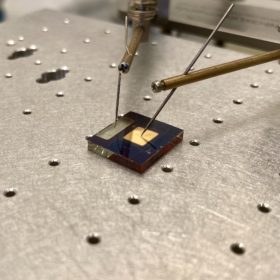
Cadmium sulfide, a poor partner for selenium tandem solar cells
A Danish-German research team has shown that using cadmium sulfide as an n-type partner in heterojunction tandem solar cells based on selenium does not produce satisfying results. The team has discouraged other scientists from following the same path.

Future climate scenarios to adversely affect Australia’s PV capacity
Australia is blessed with an incredible solar resource, but it will be diminished by global warming.
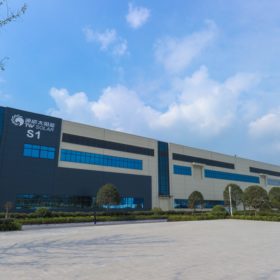
Chinese PV Industry Brief: Daqo wiped debts as poly price continued to rise
The worldwide solar boom is proving so profitable the polysilicon manufacturer is even thinking of turning to PV panels to power its manufacturing operations, rather than cheap coal.
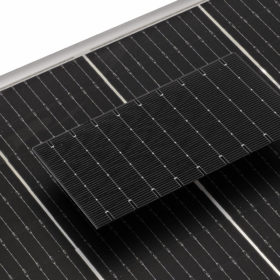
Jinko and Tongwei strengthen supply chain tie-up
The former has committed to invest more than $70 million into a 100,000-ton polysilicon production line in Leshan that will then supply it with 30,000 tons of its output annually.
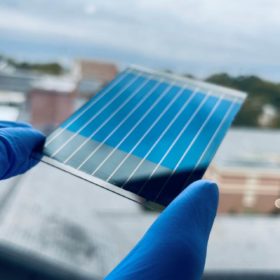
Lead-absorbing encapsulation for 18.5%-efficient mini perovskite solar module
The solar module has an area of 31.5cm2 and is relying on perovskite cells with an efficiency of 22.9%. It was encapsulated with a special ionogel that is claimed to enhance the module’s impact resistivity and stability, as well as to reduce the possibility of lead leakage.

Webinar Q&A: The future of back contact technology
Last month, in a pv magazine Webinar held in partnership with Endurans Solar, we took a closer at Endurans’ conductive backsheet for back contact modules, and examined recent progress in back contact cell and module technologies, and their growing market potential over the next few years. Here, presenters Hugo Schoot, Business director at Endurans Solar, and Bram Verschoor, CCO at equipment supplier Eurotron, answer a more of the questions posed by the audience during the webinar.

GCL-Poly says staff at state company gave misleading responses to investigation into problematic pre-payment
“Junior” figures at state-owned Sinomec Refinery & Chemical Corp told investigators from then-GCL auditor Deloitte that most of an advance payment made for a granular silicon plant had been passed on, in a bid to dissuade GCL from halting the EPC contract, the solar manufacturer said on Friday.

Another Chinese module maker may face WRO enforcement in the U.S., Roth Capital warns
Given the Withhold Release Order (WRO) and the potential anti-circumvention tariff challenges, U.S. module supply risk is material, the analyst firm said in a note to clients.
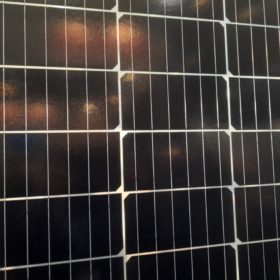
Module price hike impacting middle-sized PV projects in South Korea
The continuous rise in solar panel prices may affect PV projects of up to 1 MW tendered by the Korea Energy Agency and the domestic solar module industry may not be able to provide the necessary production capacity to respond to the recent supply bottleneck.
