
Foldable solar panel for disaster prevention
The portable module has a foldable design with a four-panel structure and a power output of 100 W. It also incorporates a Suncast module that indicates the best height and tilt angle it must have to ensure optimal yield.

US solar panel shipments rose 33% in 2020
Solar PV module shipments reached a record high in the U.S. market in 2020, up 33% year on year.
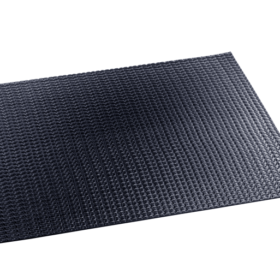
Flexible solar panel for vehicle-integrated applications
Called SolFlex, the frameless panel is based on 22%-efficient solar cells and is designed for high, one-sided heat load. The standard product measures 100x100x2.9cm, weighs in at 3.4kg, and has a power output of 170 W.
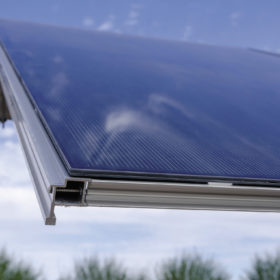
The role of chlorine in thin film solar
Scientists in the UK have explained the mechanism behind chlorine used to boost the efficiency of cadmium telluride thin-film solar cells. With new understanding of the chemical processes at work in the manufacturing process, the group hopes to be able to push for cell efficiencies beyond 25%.

India’s Reliance Industries may acquire REC Solar
Mumbai-based Reliance Industries and REC Solar have declined to comment on rumors that the Indian company might acquire the Norwegian PV module maker, in a potential transaction that Indian media outlets have already valued at $1 billion to $1.2 billion.

Goldi Solar unveils M10 modules
Indian manufacturer Goldi Solar has introduced the HELOC̣ Pro series, featuring mono-facial and bifacial modules based on M10 wafers.

Silfab doubles US solar panel production capacity
Module manufacturer Silfab has opened a new plant north of Seattle and is now shipping its 370 W Prime series modules.
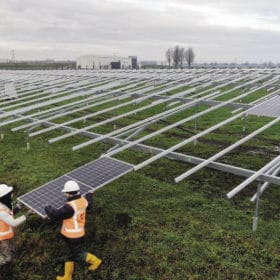
Chinese PV Industry Brief: Financials for Longi, Xinte, Solargiga, Irico, Golden Solar
Longi posted a net profit of $773 million in the first half of the year after shipping 17 GW of modules. Xinte reported a net result of $190 million and Solargiga saw its revenue increase significantly.

GCL enters ‘final phase’ of its great project sell-off
The solar farm development unit owned by the poly maker sold off 2 GW of photovoltaic generation capacity in China in the first six months of the year but has confirmed more sales lie ahead.
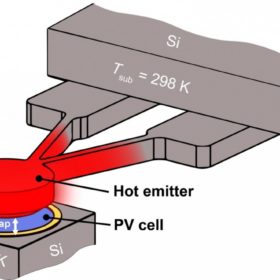
Novel approach for thermophotovoltaics promises higher efficiencies
U.S. researchers have proposed a new approach to fabricate solar thermophotovoltaics (STPV) with higher power densities. The novel technique consists of reducing the distance between the emitter and the solar cell to a nanoscale.
