
Quantum dot solar cells and the search for stability
In various forms, quantum dot technology has attracted plenty of attention among PV researchers recently. And as efficiencies have crept past the 15% mark, the community is beginning to look at other factors limiting the viability of quantum dot solar cells in a commercial setting. Scientists in Germany examined the degradation mechanisms affecting different quantum dot materials; and suggest a standardization of stability testing to enable comparability of results.
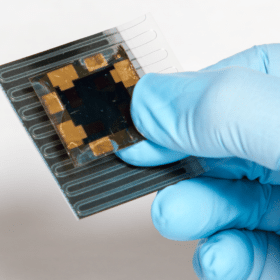
Solliance, MiaSolé hit 26.5% efficiency on tandem CIGS/perovskite solar cell
MiaSolé and Solliance have achieved record performance by optimizing the bandgap and the efficiency of both the rigid semi-transparent perovskite top cell and the flexible CIGS bottom cell.
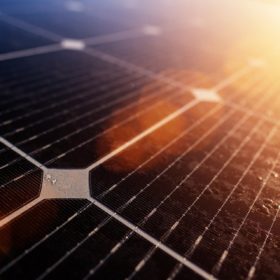
India joins race to develop high-efficiency solar cells
India’s Ministry of New and Renewable Energy is funding research to develop high-efficiency crystalline silicon solar cells, as well as perovskites.

Silver prices expected to rise by 11% this year
Silver demand for PV production worldwide is forecast to grow to 105 million ounces this year, as overall demand hits an eight-year high. Prices for the precious metal could reach a seven-year high of $30.00 per ounce this year but, according to the Silver Institute, this level is still far away from any critical threshold that would make silver supply for the solar industry problematic.

Chinese PV Industry Brief: Tongwei and Jinko team up, as NEA sets new 2030 targets
China’s National Energy Administration expects renewables to represent 40% of the nation’s energy consumption by 2030, and proposed new targets for local and regional government authorities. On the manufacturing side, Tongwei and JinkoSolar announced plans to deepen their strategic cooperation, and Huadian Group has launched its first tender this year for 7GW each of modules and inverters.
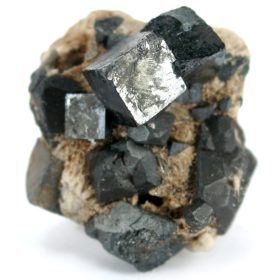
Modeling the potential of lead-free perovskites
Scientists in India modeled the performance of tin-based perovskite (methylammonium tin triiodide) finding that with careful optimizations the material could achieve efficiencies beyond 28%.
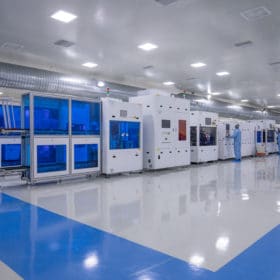
Indian manufacturer to open 750 MW solar fab by April
Solar manufacturer Premier Energies is setting up a factory in Telangana with an annual cell and module production capacity of 750 MW. The fab will be equipped to produce large-format panels with wafer sizes up to 210mm.
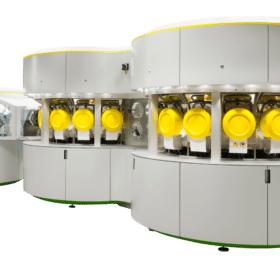
Midsummer ships CIGS production line to Russia
The production equipment was bought by Russian nanotechnology specialist Rusnano. The line will be used to produce BIPV modules at a factory in the Republic of Mordovia.

Nice Solar Energy files for insolvency under self-administration
The CIGS thin-film specialist employs 160 people in Germany. Business operations will continue with no disruption for the time being.
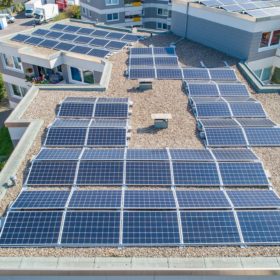
Brazil’s PV module demand reached almost 5 GW in 2020
According to a recent report from Brazilian consultancy Greener, the country imported 4.76 GW last year. Domestic PV module makers had a 3.8% market share with around 190 MW in shipped modules. The analyst also revealed that prices for distributed generation PV systems rose by 20% in 2020.
