ReNew Power to build 2 GW mono PERC PV factory in western India
ReNew Power has revealed plans to build a vertically integrated factory in the Indian state of Gujarat that will eventually produce 2 GW of mono PERC solar cells and modules per year. Production is expected to start from the next fiscal year.
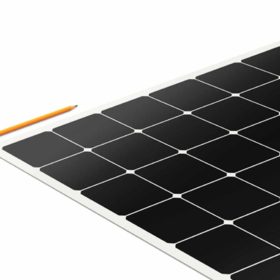
Maxeon launches frameless rooftop solar panels
Maxeon’s Air technology platform brings solar to previously inaccessible roof spaces.
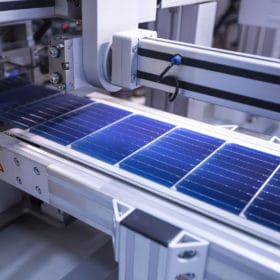
Chinese PV Industry Brief: Datang reveals results of 5 GW procurement tender
Longi is also planning to raise US$1.09 billion to support its plans to increase PV cell capacity, and Talesun has secured a solar module supply agreement from the United States.
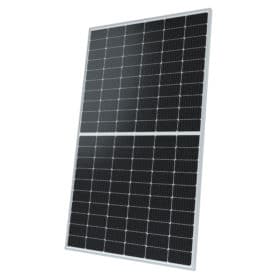
Solarwatt unveils two bifacial glass-glass panels with half-cell design
The most powerful of the two products has a power output of up to 380 W and an efficiency of 20.4%. For both panels, the temperature coefficient is -0.37%. The German manufacturer said the modules are produced at its manufacturing facility in Dresden.

India launches anti-dumping probe for PV cells from China, Thailand, Vietnam
India’s Directorate General of Trade Remedies, an entity under the Ministry of Commerce and Industry, has said that domestic manufacturers have provided sufficient evidence to warrant an investigation into the alleged dumping of solar cells.
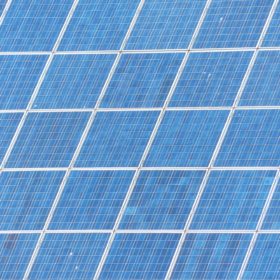
PV modules shipping at lower prices in US, EIA data shows
The Energy Information Administration says that more than 2.7 GW of modules were shipped at an average price of $0.34 per watt in March.

GCL auditor resigns over silicon project pre-payment probe
Deloitte has walked away from the polysilicon manufacturer, despite the latter having followed the accountant’s recommendation to appoint a third party to investigate why a near-$80 million payment was made in September 2019. Apparently the parties could not agree the detail of the investigation to be carried out.

Hanwha Q Cells announces n-type module with passivating contacts
Production on the new module, called Q.Tron, is expected to begin this year. The product is described as an evolution of the company’s Q.antum cell technology.
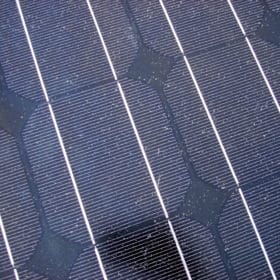
Compressed air tech for solar module cleaning, cooling
British scientists have developed an experimental compressed air system for the simultaneous cleaning and cooling of PV modules. The system was built with a compressed-air unit which was made of a compressor, an air tank, and an airflow regulation valve, and a series of nozzles. The technique was tested on a PV system located in northwestern India.
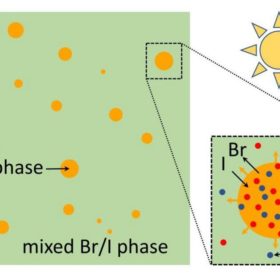
Thermodynamic model to build more-stable perovskite solar cells
Dutch scientists claim to have developed a theory that explains the mechanisms behind halide segregation, which is the main factor affecting thermal stability in perovskite solar cells. They affirmed that the theory may provide technical solutions to build more stable perovskite PV devices.
