
Making the Distributed PV Different , Interview with Zhang Yingbin, Head of Global Product strategy and market of Trina Solar
After successful launching of its Vertex series PV module products with super high power output in past several months, Trina Solar, the leading PV module maker has made another solid step in the residential rooftop field. On November 3rd, the company officially launched its latest Vertex S module which is particularly designed for the residential market. Just after the new product release, PV Magazine took the chance to interview with Dr. Zhang Yingbin, Head of Global Product strategy and market of Trina Solar and figured out more information about this new product, what are the differences from previous products and the main characters? Here below is the transcript of this interview.

India announces $3bn package to attract solar module and advanced battery manufacturers
An ambitious, $19.5 billion, five-year expansion of a previous domestic industry spending program includes money to attract investment into the sustainable energy and transport technologies.
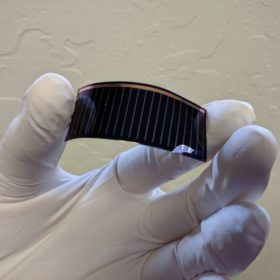
Equipment auction sounds final note for Hanergy-owned Alta Devices
If you’re interested in some lightly used MOCVD and PVD thin-film solar cell production equipment, have we got a deal for you.

Toshiba and Siemens Energy pledge to walk away from coal-fired power business
The Japanese tech giant and German power company have followed the lead of General Electric by promising not to take on any new coal power station contracts.
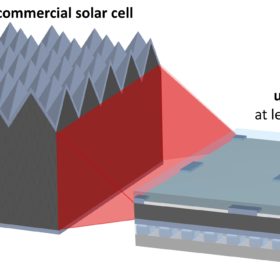
Hurdles ahead for viable ultra-thin solar cells
A new French study highlights the potential of ultra-thin PV cells, but the road to commercial production will be challenging. The researchers have proposed a series of novel cell architectures integrating photonic and electronic elements.
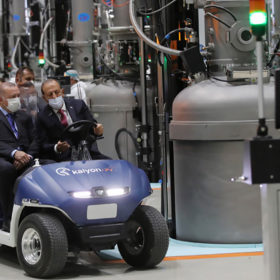
Kalyon Solar increases module capacity to 1 GW
The Turkish PV module manufacturer said the capacity increase was necessary due to increasing demand from Turkey and abroad. The plan will be implemented by June 2021.

World could add more than 900 GW of solar by 2025 if politicians grasp the nettle – IEA
With the International Energy Agency publishing its latest five-year clean energy forecast today, pv magazine takes a look at the solar content of the 162-page document.

EU bodies appeal court decision on Jiangsu Seraphim anti-dumping case
The European Court of Justice in July agreed with the Chinese manufacturer, which had said the European Commission had no right to collect duties of 47.7% on any products exported before the company had been notified – in October 2016 – that it was having its access to a minimum price agreement withdrawn by the EU.

New method to recover silicon from end-of-life modules
Compared to other techniques based on chemical reactors and organic solvents, the proposed method is said to be able to maintain a “good mechanical yield” in the recovered solar cells. According to its creators, this technique allows the reuse of silicon from the recycled panels in the production of new solar cells.
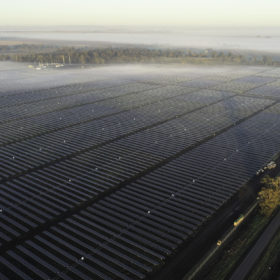
Chinese PV Industry Brief: Risen enters polysilicon production, JYT Corporation wants to build 24 GW polysilicon factory
China PV module manufacturer Risen Energy has completed the acquisition of Dunan Solar’s polysilicon business and is now operating a 12,000 MT factory. Shanghai-listed PV equipment supplier JYT Corporation wants to build a 24 GW polysilicon manufacturing facility in Sichuan Province.
