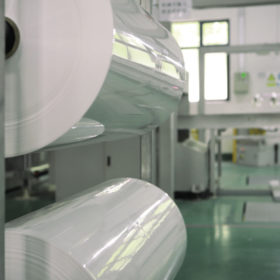
DSM unveils ‘all purpose’ polyolefin-based backsheet for PV panels
Dutch materials specialist DSM launched a new polyolefin-based backsheet that is claimed to have outstanding UV and abrasion resistance as well as good moisture barrier and hydrolysis resistance.
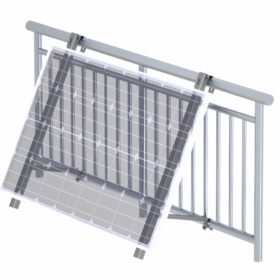
Mounting structure for balcony solar modules
Sino-Australian manufacturer Clenergy has unveiled a new mounting solution for PV panels installed in balconies. The structure is adjustable to different types of commonly-sized balconies with metal railings.
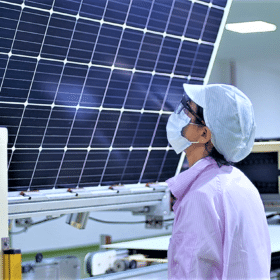
Production begins at 500 MW Mexican solar panel fab
Mexican solar module manufacturer Solarever has switched on the production lines of its manufacturing facility in Tecomán, in the state of Colima.

Carbon nanotubes in search of a solar niche
A group of German scientists has analyzed the possible trajectory of carbon nanotubes (CNTs) in photovoltaic research and industry and has suggested a roadmap to bring this technology closer to mass production. Despite a large number of challenges, the academics predicted a brilliant future for CNTs in PV applications, explaining that the barriers to their adoption are constantly being reduced.
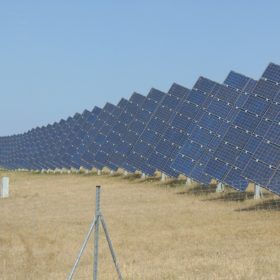
Chinese PV Industry Brief: More glass, module production capacity and a 400 MW solar park
Kibing Group and CECEP have announced plans to increase their PV glass and solar module capacities, respectively. China Energy Investment Corp is planning a 400 MW solar park in the Xinjiang Uygur autonomous region.
Daqo notes PV glass shortage in otherwise positive update
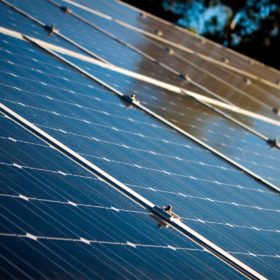
The polysilicon manufacturer says a lack of the raw material is causing a bottleneck for the industry but CEO has predicted it will be resolved as new production capacity comes online in the months ahead.

Longi releases statement on patent dispute with Hanwha Q-Cells
The Chinese photovoltaic manufacturer said the recent invalidation procedure for its patent at the Chinese Patent Office’s examination and invalidity department is only an administrative examination procedure that only examines whether or not the authorized Chinese patent complies with patent law requirements.
EU solar manufacturers must show willing on circular approach to secure funding
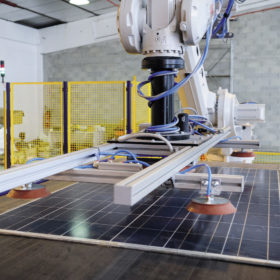
An extensive European Commission regulation has set the bar on those economic activities deemed to help in the war against global heating and, by implication, those which may hinder the effort.

Trends in solar modules – Interview with RenewSys CEO
Avinash Hiranandani, global chief executive officer and managing director of RenewSys India, speaks to pv magazine about solar module technology trends and the company’s manufacturing focus.
Even if it is cheap enough, efficiency does matter
A British-German research team claims that organic PV technologies may become mature enough to compete with crystalline silicon and thin-film products not only in BIPV, but also in power generation in the electricity market. In order to get there, however, organic PV products will have to achieve higher efficiencies.
