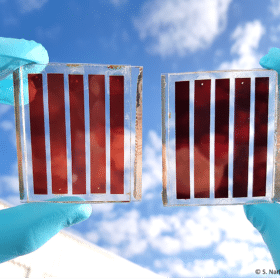
Semi-transparent dye-sensitized solar module with 8.7% efficiency
The mini-panel showed a short circuit current of 58.1 mA, an open circuit voltage of 3.63 V, and a fill factor of 58.26%. It has a power output is 122.9 mW and an active area of 14 cm2.

New safety standard for PV hazard control
The American National Standards Institute (ANSI) and the Standards Council of Canada (SCC) have approved the new UL 3741 standard.

Chinese polysilicon makers driving industry’s second great consolidation
The 275,000 metric tons of annual polysilicon production facilities pushed out of the industry by the expansion of big Chinese producers is more than double the capacity lost in the last great poly market shake-out, between 2010 and 2013.

Meyer Burger and Ecosolifer sign settlement agreement on heterojunction cell line
The two companies have concluded a settlement after several years of stalling. Ecosolifer will pay for part of the cell production line ordered in 2015 but Meyer Burger will incur a net loss of almost CHF2 million.

A closer look at perovskite degradation
Scientists in Japan put perovskite solar cells under the microscope, aiming to observe at the molecular level the degradation mechanisms that can occur during operation. Their findings offer an improved understanding of performance loss in perovskite thin films, as well as several pathways towards mitigation.
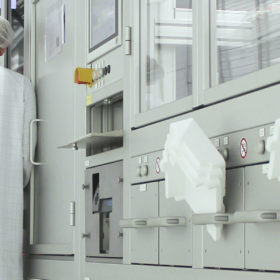
Finnish solar manufacturer finally starts production in Vilnius
Valoe completed the 15-month purchase process of a 60 MW cell production line from Solitek in the spring and installed interdigitated back-contact production equipment. It hopes to begin deliveries in the next quarter.
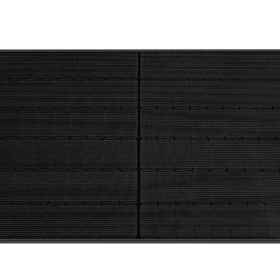
Panasonic launches module series compatible with its Evervolt battery
Available in four different products, the series features a conversion efficiency of 20-21.2%. Two of the panels are packaged in a sleek, all-black aesthetic.
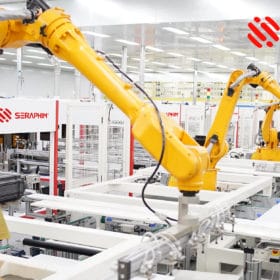
Seraphim announces new module production in Vietnam
Chinese tier-1 manufacturer Seraphim announced plans for a new factory in Vietnam. The module assembly facility will have 750 MW total capacity and is expected to serve both local and international demand.
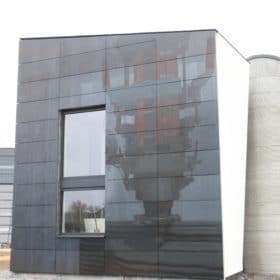
Solar facade for 3D-printed concrete house
Taiwan-based Heliartec has deployed a solar facade on a 3D-printed concrete house in Belgium. It said it installed the solar facade with the “circular construction” philosophy in mind.
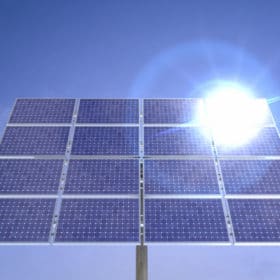
Cooling PV panels with shallow geothermal energy
Iraqi researchers have demonstrated the technical and economical feasibility of using shallow geothermal energy to cool PV systems. They tested two different techniques – a closed-loop system and an open-cycle system – to reduce power losses from 30% to up to 4.1%.
