
The weekend read: New pathways in flexible thin film PV
Having picked up GBP 5.8 million ($8 million) in a series of investments, U.K.-based Power Roll is pushing ahead with pilot production of an innovative new thin film with which it can manufacture both solar modules and capacitors. In the future, the design could also bring the potential for solar generation and energy storage within a single lightweight device.
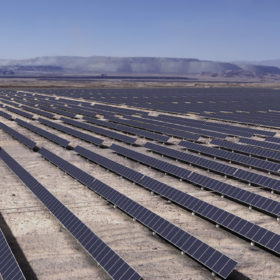
Weekly Round-Up: Gigafactory in Spain, financial close in Armenia, PPA in Sweden
Solar and storage are developing at a relentless pace and pv magazine cannot cover all the interesting developments that are announced day by day. In this weekly Round-Up, we provide a quick review of all facts and deals that should not be off of our readers’ radar.
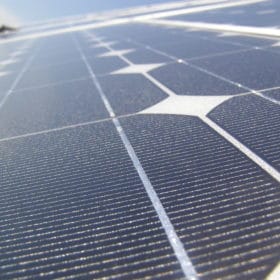
US government wants to cut solar costs by 60% in 10 years
The US Energy Department set a goal of achieving 2 cents/kWh by 2030, and announced an initial $128 million in funding to support technology development.
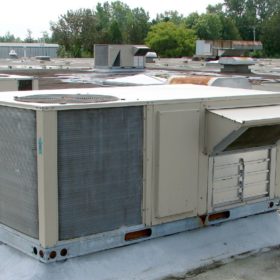
Cooling PV panels with HVAC system exhaust
A French-Lebanese research group has proposed a way to cool down PV modules by using air exhausted from heating, ventilation, and air conditioning (HVAC) systems. They showed that array performance improves when the cooling load rises.

Polyelectrolyte-based inverted perovskite solar cell with 20.29% efficiency
Taiwanese researchers have added bathocuproine (BCP) molecules to three different kinds of solvents used in perovskite cells and have ascertained how this combination increases the carrier mobility and passivates the electron-poor defects. Furthermore, they utilized a polyelectrolyte (P3CT-Na) thin film as hole transporting material instead of commonly-used thin films based on PEDOT:PSS.
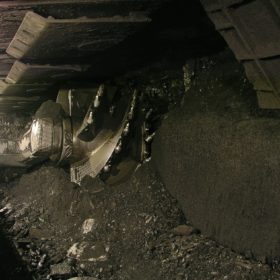
China’s ‘quasi-monopolistic’ stranglehold on solar noted by EU body
The bloc should accelerate investment into mining and processing within its shores, as well as ramping up recycling, according to European employers and trades unions, with coal workers already equipped with the necessary transferable skills.

Guide to help installers detect hidden costs in high-power modules
Spanish PV product distributor Techno Sun has published a report analyzing the consequences of high-power modules for installers and distributors. The guide provides a method to calculate the additional costs of large solar panels from different points of view.
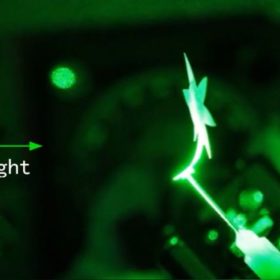
New photonic material for self-aligning solar cells
US scientists have made light-tracking, three-junction tandem PV cells with an active area of 650 × 650 square micrometers. They are based on indium gallium phosphide, gallium arsenide, and indium gallium arsenide antimony nitride and use photonic crystal film for maximum efficiency.

DuPont Teijin: Solar is at a crossroads, the PV value chain must come together
Rivalry is an integral part of the global business landscape, particularly in an industry like solar where products have become commodities. However, as Steven Davies, EMEA market manager for DuPont Teijin Films underlines, when it comes to sustainability, cross-industry partnerships are increasingly necessary to overcome the challenges companies are facing, including changing consumer demands and supply chain risks posed from climate change disruptions.
Chinese PV Industry Brief: Another factory under construction
Talesun has begun work on its 5 GW factory in Siyang county, Jiangsu province and China’s second-largest grid operator, China Southern Power Grid, has announced around 200 GW of renewable energy capacity will be deployed on its service area over the next 10 years.
