
Finnish solar manufacturer finally starts production in Vilnius
Valoe completed the 15-month purchase process of a 60 MW cell production line from Solitek in the spring and installed interdigitated back-contact production equipment. It hopes to begin deliveries in the next quarter.
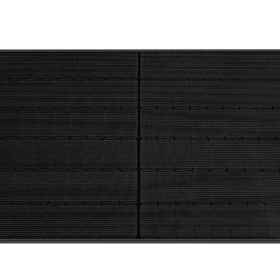
Panasonic launches module series compatible with its Evervolt battery
Available in four different products, the series features a conversion efficiency of 20-21.2%. Two of the panels are packaged in a sleek, all-black aesthetic.

Seraphim announces new module production in Vietnam
Chinese tier-1 manufacturer Seraphim announced plans for a new factory in Vietnam. The module assembly facility will have 750 MW total capacity and is expected to serve both local and international demand.
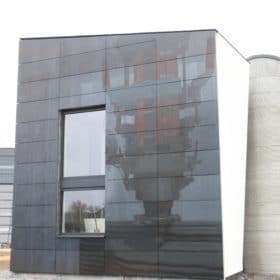
Solar facade for 3D-printed concrete house
Taiwan-based Heliartec has deployed a solar facade on a 3D-printed concrete house in Belgium. It said it installed the solar facade with the “circular construction” philosophy in mind.
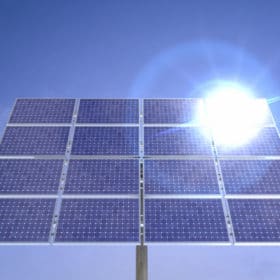
Cooling PV panels with shallow geothermal energy
Iraqi researchers have demonstrated the technical and economical feasibility of using shallow geothermal energy to cool PV systems. They tested two different techniques – a closed-loop system and an open-cycle system – to reduce power losses from 30% to up to 4.1%.
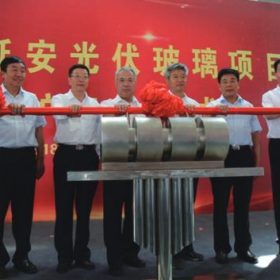
The dash to glass
Hong Kong-listed solar company Irico New Energy is preparing to shunt its non solar glass business units into Chinese state-controlled parent Irico Group so it can treble its PV glass production capacity in 2024 with the help of a four-line, $108 million manufacturing facility.
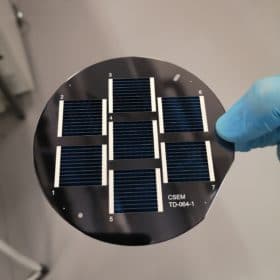
A 26.5% efficient perovskite-silicon tandem cell
Scientists in Switzerland achieved 26.5% efficiency on a perovskite-silicon tandem cell measuring 4cm² and relying on industry-standard screen-printed metallization, further demonstrating the technology’s potential for large-scale production and low-cost electricity generation.
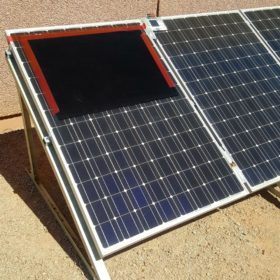
US scientists apply Suns-VoC method to outdoor PV tests
Researchers in Arizona have used the Suns-VoC characterization method for indoor solar cell testing to monitor PV installations. The method can also be used with outdoor distributed-generation and large-scale solar arrays.

Biden, the EU and China to usher in ‘golden age’ for solar – Jinko
The company shipped a record 5.1 GW of modules in the July-to-September period and expects to hit up to 19 GW for the year, with ‘nearly 100%’ of its products likely to be based on monocrystalline technology in 2020.

Low-cost organic pigment coating for 21.1%-efficient perovskite solar cell
Scientists in the United States have conceived a new process to apply a low-cost organic pigment to perovskite solar cells. The new technique is claimed to increase the efficiency of the devices by around 1.2% and also to improve the cells’ stability.
