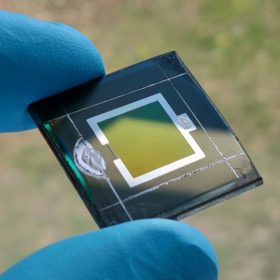
HZB scientists announce 24.16% efficiency for tandem CIGS solar cell
The Fraunhofer Institute for Solar Energy Systems’ (ISE) CalLab has confirmed the new efficiency rating. The researchers have combined semiconductors, perovskites and CIGS to produce a monolithic two-terminal tandem cell.
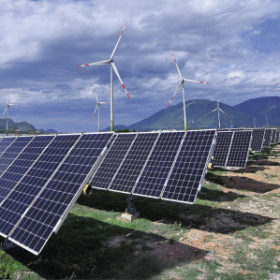
Covid-19 daily bulletin: Renewables squeezing out fossil fuels as energy demand plunges
Although the energy price recovered this week, ultra low levels driven by bumper solar power generation on a sunny weekend in Germany reportedly put further pressure on the business case for conventional energy.

Solar cleared in damages to Dutch football stadium
A failed top rail girder connection was responsible for the 2019 roof collapse at AZ Alkmaar’s football stadium, an investigation by Dutch engineering firm Royal HaskoningDHV has revealed. The collapse was triggered by strong wind loads during a storm.
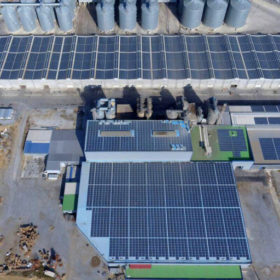
Turkey sets new rules for solar module imports
The new regulations state that import duties on solar modules will now be calculated per kilogram rather than by square meter, as they were under the old regulations. This could favor Turkish manufacturers, as high-efficiency modules are generally now heavier than they were a few years ago. Under the previous rules, PV panel imports enjoyed reduced value-added tax rates as yields increased and module sizes remained unchanged.

ClearVue’s luminescent solar concentrators create clear PV windows
The lure of building integrated photovoltaics continues to attract entrepreneurs and startups.
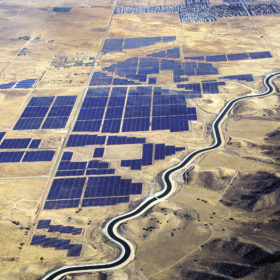
JinkoSolar says US authorities see no violation of Hanwha Q-Cells patent
The patentability of Korean company Hanwha’s technology is being examined by a U.S. commission, according to Jinko. The Chinese manufacturer said it expects a final decision by December. Hanwha responded by announcing its decision to appeal.
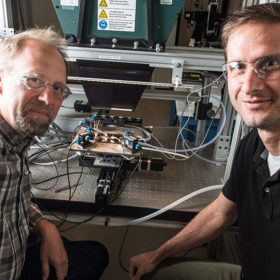
Six-junction III–V solar cell with 47.1% efficiency
A U.S. research group has developed a new solar cell, based on six active photoactive layers, to capture light from a specific part of the solar spectrum. The scientists claim that they could potentially reach a 50% efficiency rate with the new cell.

No show, no problem: solar industry solutions to canceled events
In light of the slew of trade shows and industry events canceled over the Covid-19 pandemic, solar companies and industry leaders have moved online, with virtual presentations, information sessions, and product debuts to get you through quarantine.
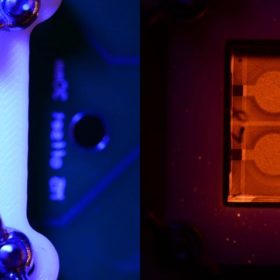
Shine! You’re on photoluminescence camera!
Researchers in Australia and China used intensity-modulated photoluminescence to map the series resistance of perovskite solar cells with a technique which could further understanding of the causes of instability issues in such devices.
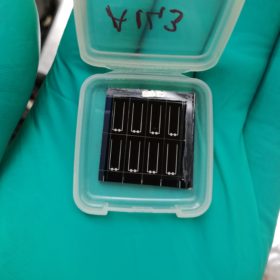
New process for kesterite solar cells with 10% efficiency
German scientists have developed a new process for the formation of a phase pure kesterite Cu2ZnSnSe4 (CZTSe), which they claim can improve the material homogeneity and suppress the well-known issue of tin losses. The new technique is based on stacked elemental and alloyed precursors with a Zn/Cu-Sn/Zn precursor structure.
