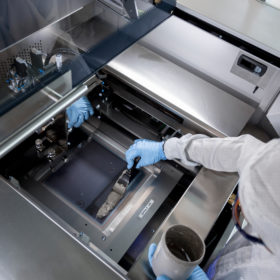
New metallization process cuts silver demand for modules by 30%
Fraunhofer ISE has worked with German technology companies to improve the metallization process in silicon solar cells. The result could drive down module costs quite a bit.
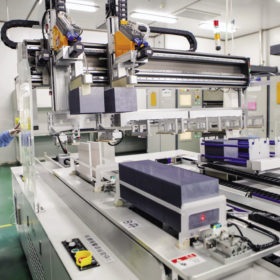
Comtec ready to swim against the tide by outsourcing manufacturing
While the rest of China’s solar manufacturers take on ever more debt to expand their production lines as fast as possible, Comtec said it is ready to sell off fabs for the right money and will instead focus on project sales and lithium battery and EV business opportunities.

Big money for Turkey’s 500 MW solar factory
With the Turkish government having given Kalyon Enerji another three years to build the 500 MW facility it won a tender to construct with former partner Hanwha Q Cells, Ankara has now committed a $333 million “super incentive” to the fab.

Ukraine orders lift Risen up overseas module shipment rankings
The Ningbo-based manufacturer shipped more than a quarter of the panels it exported in the first six months of the year to the eastern European nation. All the big manufacturers posted rising shipment volumes as emerging markets made up for slow growth in their homeland.
Solibro restructuring plan will depend on shareholders
The District Court of Dessau-Roßlau yesterday confirmed self-administered insolvency proceedings have been conducted at the German thin-film CIGS module manufacturer and a provisional administrator has been appointed.

Longi brings forward manufacturing capacity plans by a year
Having stated an intent to hit 65 GW of annual mono wafer production capacity by the end of 2021, the Chinese solar manufacturing giant has now said that landmark will be achieved next year.

Space age solar solution moves toward production
A consortium of European research institutes has received €10.6 million in EU funding to establish pilot production of a high efficiency module concept developed by Swiss startup Insolight. The module combines high efficiency multijunction cells with a solar concentrator lens and has previously demonstrated 29% efficiency.

German scientists team up for perovskite tandem cells
Two of Germany’s leading research institutes and a CIGS module maker have announced plans to work on the development of perovskite-CIGS tandem cells with a target of producing thin film modules with better than 30% efficiency.

‘Explosive growth’ ahead for Chinese PV predicts Solargiga
The Chinese manufacturer is holding out hope a boom that is expected to start imminently will help it turnaround losses that forced it to issue a profit warning last week. Getting its new production line in Qujing up to speed will help, provided the demand materializes.
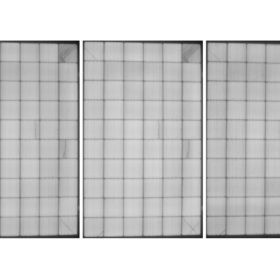
Tuesday webinar: New test for microcracks will ‘push the industry to exceed benchmarks’
A new test design from the University of Central Florida has challenged modules with different cell technologies. The results show advantages for the heterojunction modules tested. Here we discuss the new method with its designer.
