
Operation Silver Frog: Innovative 2 GW solar production plan for green hydrogen in Europe
European partners have submitted a joint proposal to use EU-made solar modules and wind turbines to power green hydrogen for use by heavy industry. The partners hope to secure designated status and backing from the bloc’s deep coffers.
JA Solar granted intellectual property rights for Ga-doping technology
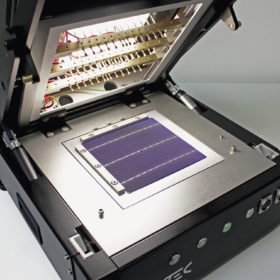
The Chinese company has announced it has acquired intellectual property rights pertaining to various applications of gallium-doped silicon wafers in solar cell applications from Japanese company Shin-Etsu Chemical.
Canadian Solar wins 394 MW of solar in two private auctions in Brazil
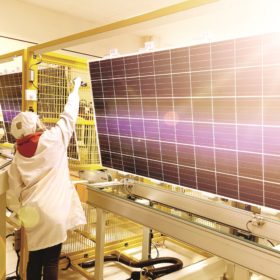
After emerging as the recipient of most of the Brazilian government’s public allocation of generation capacity, the Canadian-Chinese manufacturer has secured a large share of projects in auctions held by power companies Copel and, probably, Cemig.

Emerging markets help new faces into list of world’s top EPC providers
Although the Wiki-solar website ranking only gives a snapshot of PV project engineering, procurement and construction contracts outside China, it is nevertheless a useful indicator of the changing shape of the global solar market.

It’s official: The bifacial tariff exemption is over
The office of the U.S. Trade Representative has removed the exemption of bifacial products from Section 201 tariffs, effective October 28.
Germanium use reduced in GaAs solar cells by new two-step process
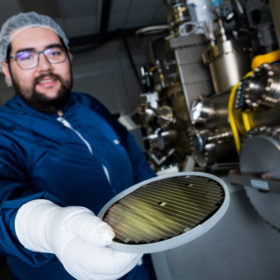
Researchers from Canada have unveiled a new germanium deposition process which is said to eliminate threading dislocations and be significantly cheaper than previous approaches. The scientists say their technique creates nanovoids on the surface of the germanium layer which can attract and annihilate undesirable dislocations.

New antenna for a better photon harvest
An Italian research team has developed a device that it says can easily be integrated into a PV cell, and can boost its efficiency by converting more light particles into a high energy state before they are absorbed by the cell. The scientists claim that their innovation could offer a green‐to‐blue photon upconversion yield as high as 15%.
The weekend read: Size matters
The latest development on the module front sees manufacturers adopting larger wafer sizes in order to reach the industry’s raised expectations for power output. Older “M2” wafers have been the standard in recent years but now appear to be on the way out. Several theories about optimal size are gaining ground, but the future direction of the standard is still far from clear.
New configuration gives perovskite cells 18% efficiency
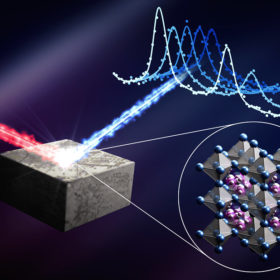
Cesium lead black perovskites could be interesting for solar cell development if their crystals are observed in their less efficient but more stable beta phase. The efficiency shortfall can be solved by healing emerging cracks in the surface of the cell using a choline iodide solution, according to an international team of scientists.

Singyes shareholders show discontent
The holders of almost six million shares in the company voted against the reappointment of chairman and CEO Liu Hongwei as a non-executive director. On Liu’s watch the company has had to turn to a state bail-out from China to help ensure its survival.
