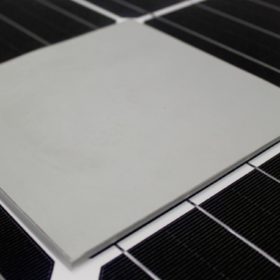
AE Solar to open 500 MW European module factory in Georgia
The German panel maker said the new factory, which will add to its 525 MW facility in China, will expand its production capacity to 1 GW. With plans in the pipeline to enter the PV project business, that figure could rise to 2 GW by the end of next year.

Hanergy plans to roll out industrial park development outside China
The Chinese thin film giant has transformed itself into a solar manufacturing equipment supplier and is set to expand a strategy which sees affiliates help fund industrial parks which then generate orders for its thin film production lines.
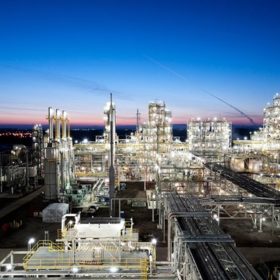
REC Silicon raises $20 million through private placement
The polysilicon maker said it will use the funds to improve its liquidity situation until access to the Chinese polysilicon market is restored. It sold 254,381,870 shares, which corresponds to approximately 9.9% of its oustanding capital.
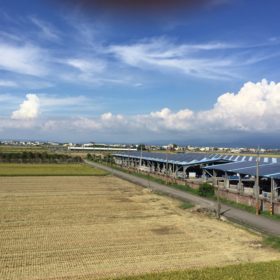
Taiwan becomes a GW solar market
TrendForce says the country deployed more than 1 GW of new PV for the first time last year, and predicts this year may see as much as 1.5 GW of new solar capacity. The nation’s cumulative capacity reached 2,618 MW at the end of last year, according to the International Renewable Energy Agency.
Tesla, GAF, RGS and now Hanergy: will solar roofs finally heat up this year?
Hanergy displayed the newest rendition of its 18.7% Thin Film Flat SOLARtile in Australia last week as it gears up for the U.S. and global product launch later in 2019.

India investigates claim of dumped coated steel products from China, Korea and Vietnam
In the latest tariff spat to afflict the solar world, India’s Directorate General of Trade Remedies will investigate a claim steel products coated with aluminum and zinc are being dumped by Far Eastern manufacturers.
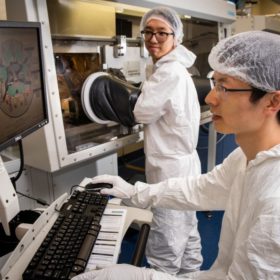
Australian researchers to develop new tandem PV cell measurement equipment
The Commonwealth Scientific and Industrial Research Organisation (CSIRO) and Adelaide-based laser supplier Lastek are developing equipment and procedures to accurately measure the performance of multi-junction solar cells with the help of an LED-based solar simulator.

Imec, Jolywood announce 23.2% front-side conversion efficiency for n-PERT bifacial cell
The result was certified by the solar cells laboratory at the calibration and test center of Germany’s Institute for Solar Energy Research. Imec’s measurements showed cell bifaciality surpassed 80%.

Four takeaways from Solarex
All the fundamentals are in place for Turkey to be a leading light in solar but an all-too-familiar lack of policy certainty, coupled with a troubled macroeconomic backdrop, mean the nation is still unable to realize its PV potential.
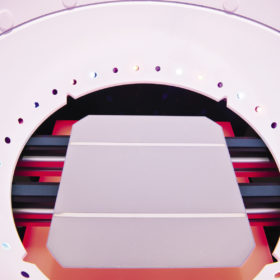
The weekend read: Quality on the line
With competition on the module market as cutthroat as ever, manufacturers are increasingly looking to emphasize the quality and reliability of their products and services as a differentiator. pv magazine investigates what’s behind some of these claims, and the move from manufacturers to more sophisticated quality assurance methods.
