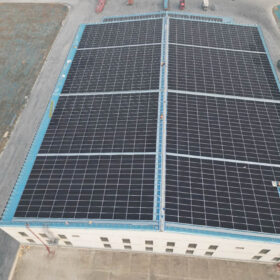
Aiko achieves 24.8% efficiency in commercial solar module production
The result concerns the company’s Comet 3N modules and has been confirmed by TÜV Nord in Germany.

Rooftop bifacial PV can produce over 9% more power than monofacial systems in high-latitudes
A study analyzing urban bifacial PV systems in high-latitude areas found they can generate 9–13% more electricity than monofacial panels under snow conditions, particularly in winter, while also achieving a lower levelized cost of electricity. The research developed a techno-economic optimization model considering snow effects, panel orientation, interrow spacing, and operation modes, highlighting sensitivity to market conditions and discount rates.
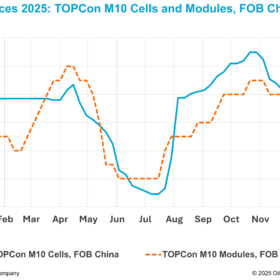
China TOPCon cell prices dip despite looming cost pressures
In a new weekly update for pv magazine, OPIS, a Dow Jones company, provides a quick look at the main price trends in the global PV industry.
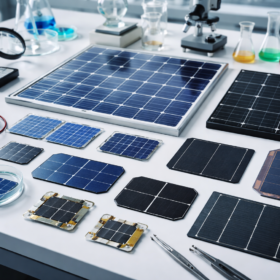
All solar cell efficiencies at a glance – delayed
The research group led by Professor Martin Green has not published yet Version 67 of the solar cell efficiency tables, due to production delays. Green, however, has accepted to comment on some of the results to be added in the upcoming edition.

European solar manufacturers urge Italy to revise heterojunction tax rule
Eleven European solar module makers say Italy’s 2026 tax incentive unfairly favors heterojunction (HJT) technology, risks higher costs and limits competition across the PV market.
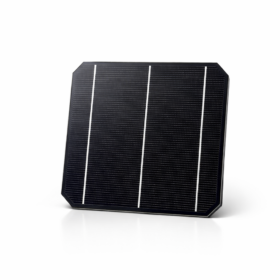
French testing body flags durability risks in TOPCon solar modules
Accelerated testing by French certification body Certisolis finds wide performance divergence and design vulnerabilities in tunnel oxide passivated contact (TOPCon) solar modules that current international standards do not capture.
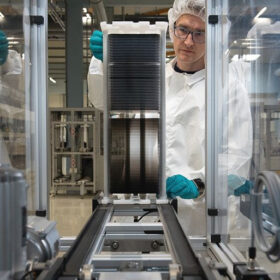
The impact of transparent conductive electrodes on perovskite-silicon tandem solar cell performance
An Oxford researcher has found that transparent conducting electrodes can reduce perovskite–silicon tandem solar cell efficiency by over 2%, with losses linked to electrical resistance, optical effects, and geometric trade-offs. Using a unified optical–electrical model, the scientist showed how careful optimization of TCE stacks, coatings, and cell design is critical to closing the gap toward the 37%–38% efficiency frontier.
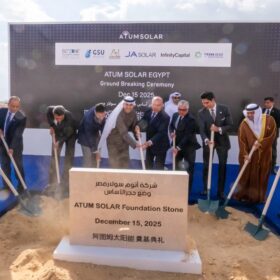
JA Solar joins consortium building $210 million PV module factory in Egypt
The 200 square meter facility is targeting an annual manufacturing capacity of 2 GW of solar cells and 2 GW of solar modules. The solar cell production will be 100% for export.

Longi backs Carbon’s shift to GW-scale solar production in France
France-based startup Carbon plans to partner with Chinese manufacturer Longi and adopt back-contact (BC) solar technology as it revises its roadmap for a gigawatt-scale solar module factory.
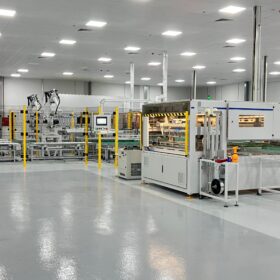
Ecoprogetti ramps up solar module production line in Oman
Italy’s Ecoprogetti has delivered a 400 MW fully automated solar module production line in Oman. The facility is the company’s second in the country, which it says equates to a majority share of Oman’s module manufacturing market.
