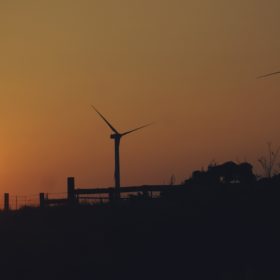
A mega solar and wind project for Western Australia
The 15 GW Asian Renewable Energy Hub has been recommended for approval by environmental authorities in the Pilbara region. The project was originally intended to export clean energy to Jakarta and Singapore via subsea, high voltage DC cables but its focus has shifted to domestic industrial consumers.

Storing solar and wind energy with compressed air
Researchers have studied the potential of using compressed air to store renewable energy in offshore saline aquifers. The technology could hold 77-96 TWh for up to two months in British waters, although the costs have proven hard to pin down.

Wearable ‘honeycomb’ lithium-ion battery
Scientists in South Korea have worked with graphene and carbon nanotubes to develop a working lithium-ion battery that can be stretched by up to 50% without damage to any of the components. According to the scientists, the battery represents a significant step in the development of wearable or body-implantable electronic devices.

Covid-19 weekly briefing: Merchant solar developers could seek shelter in return to subsidies and PPAs are being revisited, but at least the Irish are coping with lockdown measures
The unfolding effects of the Covid-19 crisis, and fears of a possible second wave, have split analysts trying to guess how the unsubsidized renewables market will emerge as slumping demand continued to distort power markets. pv magazine rounds up the week’s coronavirus developments.
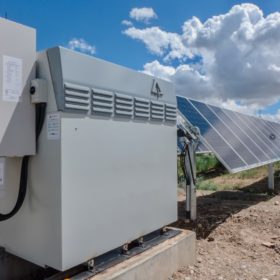
A redox flow battery for MW-sized solar-plus-storage
Matt Harper, chief commercial officer of newly-merged British-Canadian vanadium redox flow battery business Invinity Energy Systems has spoken to pv magazine about the VS3-022 Battery Unit it is marketing for grid scale solar-plus-storage projects and why it may be a better bet than lithium-ion.

Is deep-sea mining eco-friendlier than land-based mining?
The International Seabed Authority will change regulations for deep-sea mining this year. The ocean floor is covered with potato-sized pebbles containing high levels of cobalt, manganese, nickel and copper – materials that could soon be in short supply as the energy transition progresses.

Covid-19 weekly briefing: A cold wind for APAC renewables, respite for Indian developers and another salary cut for SunPower execs
The coronavirus epidemic continues to batter the global economy, including the solar industry, but falling demand during lockdowns has brought negative energy prices as well as helping drive record solar generation, amid less-polluted skies.
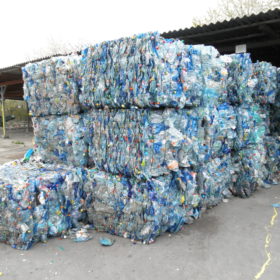
Instant battery electrodes – just two minutes in the microwave
Scientists in the United States have used microwaves to convert ubiquitous plastic packaging material polyethylene terephthalate into a battery electrode component. The researchers say anodes based on the material could be suitable for both lithium-ion and sodium-ion devices.
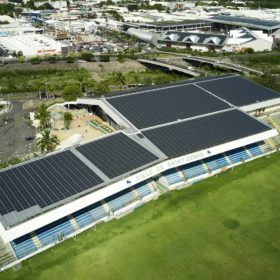
La Réunion stadium hosts 1.25 MW/1.33 MWh of solar-plus-storage
The project was selected in a tender for storage deployment in non mainland grid interconnected areas that was finalized by France’s Energy Regulatory Commission in 2016.

Europe can be 60% powered by solar before 2050
Perhaps it is not surprising a report co-produced by Europe’s solar industry places PV at the heart of a zero-carbon, mid-century energy system on the continent. However, the study does flesh out two out of three scenarios in which becoming carbon-neutral by 2050, or even 2040, could be possible.
