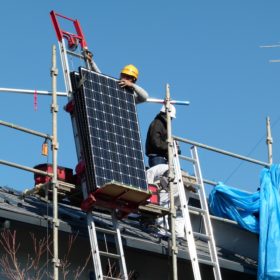
Sunrun eating into utility operations
By providing solar-plus-storage, contracting to supply capacity in wholesale markets and even considering microgrid communities, Sunrun is taking on more of the space traditionally occupied by utilities and large, centralized power generators.

Spain’s Balearic Islands to host 10 MW hydrogen project
The green hydrogen production plant planned for the Lloseta industrial area will be a pioneer project for Spain and Europe, say regional government officials, and is scheduled to start operating from 2021.
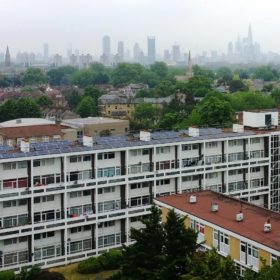
EDF commissions ‘France’s largest collective self-consumption PV project’
A social housing development of 100 dwellings will benefit from the electricity generated by 600 sq meters of PV panels. Any output not used by residents will power hot water tanks, effectively functioning as an energy storage element of the project.
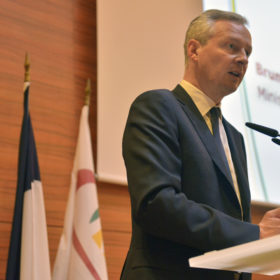
French-German battery alliance secures €5 billion as Tesvolt works on gigafactory
Ministers have reaffirmed plans for a Franco-German battery industry. The project is being supported in principle by the European Commission, which could give its approval by October. Meanwhile, German storage specialist Tesvolt is building a commercial storage system factory in Germany.
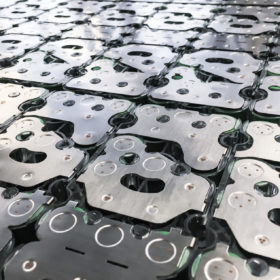
Battery storage market will be worth $13 billion by 2023
Analyst Globaldata says falling system prices, and the need for more resilient grids and favorable policies, continue to fire the energy storage industry around the globe and the Asia-Pacific region is likely to remain the biggest market.
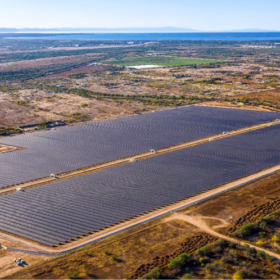
Region’s first utility scale solar-plus-storage project comes online in Mexico
Located in the town of La Paz, in Baja California Sur, the Aura Solar III plant has a generation capacity of 32 MW and includes a lithium-ion battery storage system with a capacity of 10.5 MW/7.0 MWh.
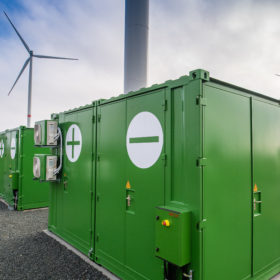
Renewables and geopolitics: storage could rip up the current global picture
In the latest of a series of interviews about the geopolitics of renewable energy, Indra Overland, head of the Center for Energy Research at the Norwegian Institute for International Affairs, explains how storage could change the global energy landscape by eliminating entrenched strategic dependencies. The impact of storage, he says, will be stronger in regions dependent on fossil fuels.

Gresham House eyes 182 MW storage portfolio in the UK
The asset manager has seen good returns on the 70 MW it has already acquired. Despite the U.K. government cutting subsidies for renewable energy, the fund manager believes the country will be a high growth market for storage.
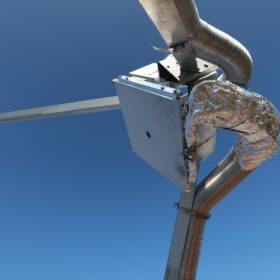
Scientists concentrate on efficient hydrogen production
Researchers from the Laboratory of Renewable Energy Science and Engineering at Switzerland’s Ecole Polytechnique Federale de Lausanne have developed a device which they say could “provide a pathway for device scalability aimed towards the large scale deployment of photo-electrochemical hydrogen production”.
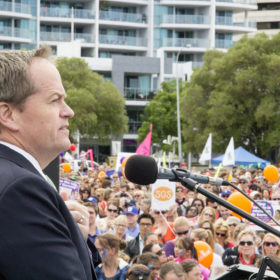
Labor plan to aggregate 4,000 schools into virtual power plants in $1 billion solar program
Australia’s federal Labor party has pledged to roll out PV generation and batteries at schools across the nation, and to create VPPs supporting up to 365 MW of capacity.
