
Solar lobby group’s UK budget demands unlikely to be heeded
The UK Solar Trade Association has laid out its wish list ahead of new chancellor Rishi Sunak’s first budget speech tomorrow, with an exemption of solar from onerous tax valuations top of the agenda. COVID-19 measures, though, are likely to cast everything else into the shade.
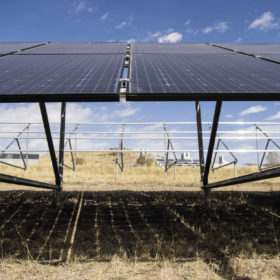
Building on bifacial momentum
Getting the most out of a bifacial module requires a rethink at almost every level of system design and the industry is hungry for field data generated by such systems to better inform energy yield modeling and define the best approaches to maximizing yield at minimal cost. In May, the U.S. National Renewable Energy Laboratory began a three-year study into bifacial performance which is beginning to yield results.

EU climate law sets the stage for a green transformation
Although decried for lacking ambition and as an abdication of responsibility in some quarters, the climate law proposed by the European Commission may be more ambitious than it first appears, as Felicia Jackson, from the center for sustainable finance of the School of Oriental and African Studies at the University of London – considers here.
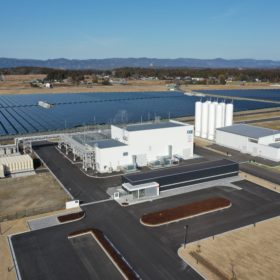
Solar-powered hydrogen production in Japan
Toshiba has finalized construction of a 10 MW hydrogen plant in Fukushima prefecture which draws power from 20 MW of solar generation capacity as well as the grid.

Optimistic solar outlook in India dimmed by Covid-19
Developers are also expected to drag their heels over project completion during the first half of the year as the safeguarding duty applied to imported Chinese and Malaysian solar products is due to expire at the end of July.
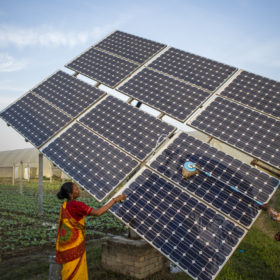
Solar will turn vicious water-energy-climate cycle into virtuous loop
The International Water Management Institute is promoting the Solar Irrigation for Agricultural Resilience (SoLAR) initiative to expand the use of solar irrigation systems throughout Bangladesh, India, Nepal, and Pakistan. Proponents of solar irrigation pumps say that they can have a strong positive impact on groundwater.
Storage Highlights 2020 – Megawatt Winner: m-Bee
With the new decade, pv magazine brings forth yet another energy storage highlights. Approximately two weeks of work went into sifting through this year’s 22 highlights submissions, conducting research, and preparing them for the jury. Once again, this year’s work was crowned by the moderation of the jury meeting, in which six leading industry experts discussed the technologies and solutions. Differing from previous years, the jurors have selected the top five “Gigawatt” winners, followed by five “Megawatt” winners, and a series of “Finalists” which we are publishing here.

Renewable-powered hydrogen for Oman
Belgian engineer DEME is planning up to 500 MW of hydrogen production capacity at the port of Dumq, which is rich in solar and wind power resources. The engineer plans to ship hydrogen from the port to Europe.

The ambiguous impact of battery storage on emissions
U.S. researchers have investigated whether energy storage deployment could actually drive up greenhouse gas emissions in the short term in some energy markets. The fact the existing literature considers only the dispatch of energy from storage facilities in the current fossil fuel-renewables energy mix, though, could understate the long-term emissions reduction benefits of such facilities.
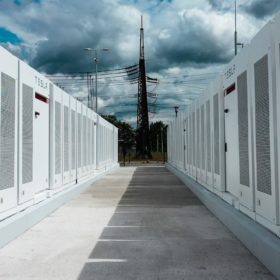
Evaluating battery chemistries for grid-level storage
Researchers in China have ranked some of the most commonly used battery chemistries according to parameters deemed important for grid-level storage. The team gave a score in each category and determined a winner – and it wasn’t lithium-ion.
