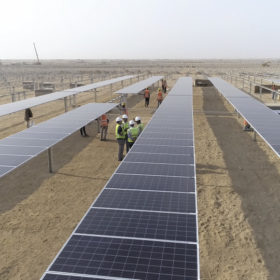
Solar is gaining traction in MENA region – but plenty of obstacles remain
Solar deployment continued to pick up in the Middle East and North Africa in 2019, the Middle East Solar Industry Association has said in its annual report.
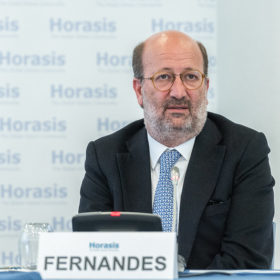
Portugal pushes back solar auction to March
The minister of environment and energy transition has told parliament two auctions for large scale solar will be held this year, with a new procurement round now planned. The minister revealed energy storage may play a part in the capacity tenders.

Abu Dhabi fund approves $105m for clean energy projects
The Abu Dhabi Fund for Development will support half a dozen megawatt scale projects featuring solar in the Caribbean and Africa. In addition to around 42.5 MW of new solar capacity, the fund will also back the development of energy storage, waste-to-energy and biogas facilities.

US government expects 24 GW of new solar this year
A Department of Energy agency expects 17.4 GW (DC) of utility scale solar power generation capacity plus 6.6 GW of small scale PV will be installed in 2020. That volume would be 60% higher than the record, set in 2016.

NEC Energy Solutions to build 100 MW of storage capacity in Northern Ireland
The company will provide two 50 MW systems for investor the Gore Street Energy Storage Fund and project developer Low Carbon. The projects will be completed by the first quarter of 2021.
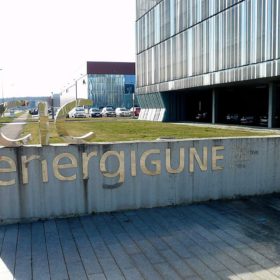
New organic redox flow battery aims for €0.05/kWh/cycle by 2030
An international research group led by CIC EnergiGUNE, a Spanish research center, is designing new redox organic flow batteries. The researchers claim the batteries will offer longer duration, as well as higher power and energy densities, in a more environmentally sustainable format. The European Commission provided €3.8 million in funding for the initiative.
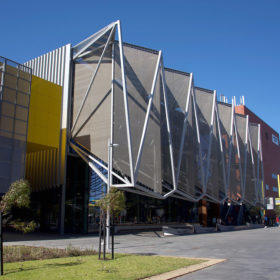
New lithium-sulfur battery unveiled by Aussie scientists
Scientists at Monash University claim to have developed the world’s most efficient lithium-sulfur battery. They say the new device could enable an electric vehicle to drive more than 1,000km on a single charge.
Suzuki-led JV to invest $517m in second phase of Indian lithium-ion factory
A joint venture with Japanese peers Toshiba and Denso will make the investment in the Gujarat plant over the 2021-25 period, having pumped $174 million into the first phase of development.
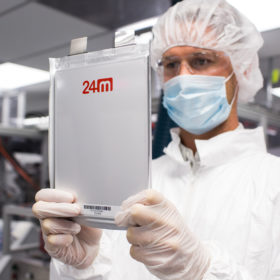
Kyocera to launch world first SemiSolid lithium-ion battery
The Japanese electronics giant is offering a new cell architecture developed by battery start-up 24M, in the U.S., which significantly improves battery economics. Kyocera will be the first company to bring the technology to market.
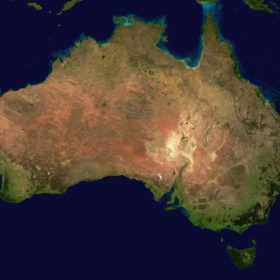
A Green New Deal for Australia?
The cataclysmic bushfire season ravaging the nation is a reminder of the risk climate change poses to Australia’s economic and social prosperity. An international roadmap to freedom from fossil fuels by 2050 produced by the U.S.’ Stanford University says Australia needs another 280 GW of solar and tens of billions of dollars of investment to turn down the heat.
