
Israeli national lottery supports rooftop PV program with $0.12/kWh feed-in tariff
The incentive scheme awards a 23-year, $0.12/kWh feed-in tariff to rooftop arrays with a generation capacity of up to 200 kW. Already, 141 municipalities have applied to install 116 MW of rooftop solar capacity and the government has increased the program’s budget from $28.5 million to $143 million.

Covid-19 weekly round-up: Residential systems in Italy will get a 110% tax rebate and UK consumers are being paid to turn appliances on as coronavirus turns the energy world upside down
Plus, Australia’s Greens want renewables front and center of the post Covid-19 economy and Mexican plant owners are overturning a politically-motivated ban on clean energy, however, Indian developer Acme solar says pandemic delays warrant it reneging on the terms of the record-low solar price agreement it signed.

Innovation promises cheaper solar cell glass manufacturing
Scientists have developed a hybrid production method combining metal mesh and a metal-oxide layer over a glass substrate which they say brings down production cost by 80% compared to the tin-doped, indium oxide-based technology currently in use.
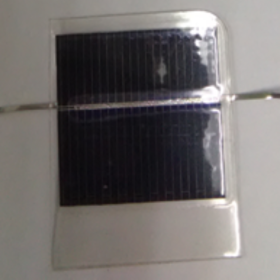
Pouch lamination technique for solar cell encapsulation
Scientists in India have used a pouch laminator to encapsulate a polycrystalline solar cell. The resulting device, the researchers claim, showed better UV photon absorption than solar cells treated with a polymer surface coating.

Indian developer wants to walk away from record low solar price
Acme Solar made headlines in 2018 when its offer to accept $0.0322354 per kilowatt-hour generated at a 600 MW solar farm planned in Rajasthan secured the project from federal body the Solar Energy Corporation of India. Now the developer wants to rip up the agreement, blaming Covid-19-related hold-ups.

London fund announces investment vehicle for new subsidy-free UK solar
NextEnergy Capital Group has secured a £100 million credit line from Spanish lender Santander as it aims to connect the U.K.’s largest solar plant to the grid this year.
Renewables can avoid crippling LNG and coal subsidy bill for Bangladesh
U.S. thinktank the Institute for Energy Economics and Financial Analysis says the nation should reorder its power network to harness cheap, modular renewables after existing power station overcapacity was worsened by plunging electricity demand during the Covid-19 shutdown.

Shuifa playing central role in bailing out distressed Chinese PV developers
The state-owned construction business which saved Singyes Solar with a US$200 million bail-out is now preparing to invest in a 75% stake in debt-saddled peer China Solar, whose shares have been unlisted since August 2013.

Solar tariffs of less than $0.034 not financially viable in India
Solar developers in India must consider a range of risks to secure reasonable returns on solar projects, according to research by the Institute for Energy Economics and Financial Analysis and JMK Research & Analytics.

Romania re-introduces PPAs to attract investors
The Romanian government has decided to re-introduce directly negotiated Power Purchase Agreements (PPAs) to boost investment in its renewables sector, but only projects commissioned after June 1, 2020 will be eligible.
