
EBRD backs green bond issued by Polish utility
The London-based lender has committed more than €50 million to the €218 million exercise which will cost issuer Tauron more to finance if the utility falls short of its 2030 decarbonization targets.
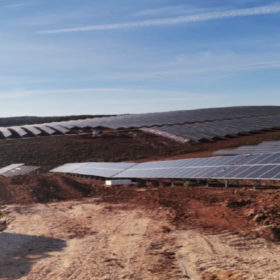
Portugal to host 257 MW solar-plus-storage plant
Located in Evora, southern Portugal, the solar park is being planned by a Spanish-Portuguese consortium. The plant will be linked to a 10 MW storage system.

Reform meets opposition
Since President Andrés Manuel López Obrador’s election at the end of 2018, renewable energy in Mexico has faced an uncertain regulatory environment. The current government is focused on restoring the power and influence of Mexico’s state-owned energy companies. But it is now at a crossroads, as the previous administration aimed to open the segment up to foreign investment. Maria Chea of IHS Markit examines the policy decisions the government has taken this year and how these have soured private investor sentiment. These changes will likely weigh on utility-scale PV procurement in the country through 2024.
Telecoms business secures 100 GWh of clean power with new procurement platform
Unnamed business was the launch customer for DNV GL’s Instatrust online PPA-matching platform. The corporate client’s request prompted offers of more than 800 GWh of renewable energy.
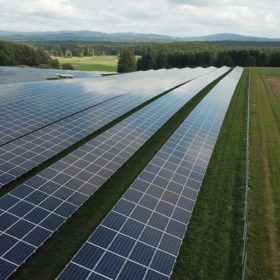
KKR’s India platform will acquire operating renewables assets
Headquartered in Mumbai, Virescent Infrastructure owns 169 MWp of solar assets in Maharashtra and 148 MWp in Tamil Nadu.

Germany deployed 3.5 GW of solar in first nine months of 2020
New additions for September totaled 388 MW. Due to strong development in the first three quarters of the year, FITs for the November-January period will be lowered by 1.8%.
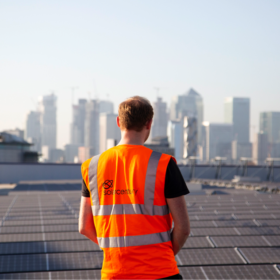
Statkraft to buy Solarcentury in latest solar-hydropower tie-up
The Norwegian hydropower business wants to pay €131 million for the London-based clean energy developer which claims to have brought to life 1.2 GWp of project capacity in seven countries since 2013.

Africa celebrates continent’s exceptional solar achievers at inaugural AFSIA Solar Awards
Africa celebrated its exceptional solar achievers in a grand ceremony streamed online on October 29, 2020. A total of 15 winners in various individual and institutional categories were unveiled at the Inaugural Africa Solar Industry Association (AFSIA) Solar Awards ceremony. The landmark event was organized in partnership with the Africa Energy Forum (AEF).

Chinese PV Industry Brief: PV additions hit 18.7 GW in January-September period
Just as the nation posted strong deployment figures, two major module manufacturers reported solid earnings for the nine months to the end of September.
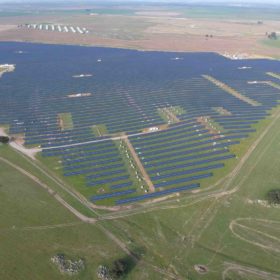
Unsubsidized PV plant goes online in Portugal
Hyperion Renewables continues to expand its PV plant portfolio and is now working on green hydrogen production and distributed generation projects.
