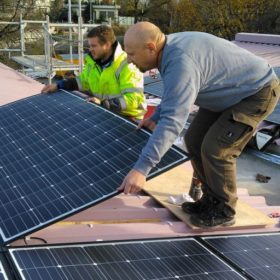
Residential solar set new US record in the last quarter with 712 MW
The U.S. residential solar market – and 15 states – are at record highs according to analyst WoodMac’s ‘don’t call it a comeback’ Q3 report, driven by new market forces. The research firm held its 2019 U.S. solar forecast at 13 GW.
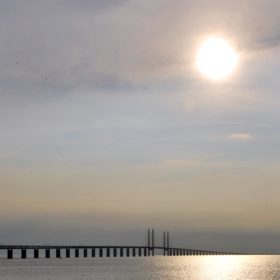
Danish merchant solar set for take-off – at former airfield
A week after the Danish government announced it may stop holding auctions for new solar and wind capacity a 155 MW unsubsidized solar project has been announced for the Jutland region. The plant will initially sell electricity to the Nordpool electricity market but its developers are also considering private supply deals.
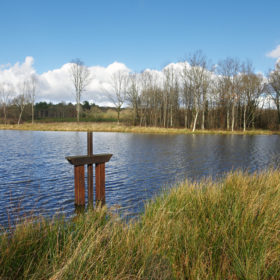
Aquavoltaic potential in Taiwan
Scientists have developed a new mathematical model which indicates floating solar on fish farms could be a lucrative option in land-scarce Taiwan. Although floating arrays could hinder fish production, the losses would be largely compensated by electricity-related income.
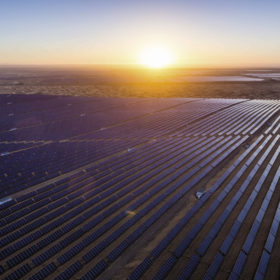
CPIA: China will add 40 GW of solar in 2020
The China Photovoltaic Industry Association secretary-general has revealed the world’s biggest solar market is unlikely to add more than 30 GW of solar generation capacity this year after just 17.5 GW was installed to the end of October.
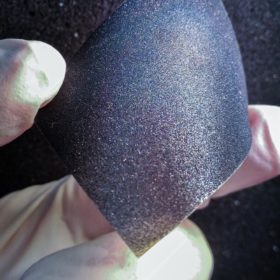
New kesterite solar cell with 8.7% efficiency
Estonian researchers have developed a new monograin powder technology made of microcrystals, which can form parallel connected miniature solar cells in a large module. By replacing copper with silver in the absorber material, the researchers were able to increase the efficiency of the cells by more than 2%.
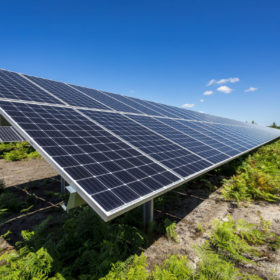
Engie secures solar PPA in France, vows to shut 1 GW of coal in Latin America
At the ongoing COP25 summit in Madrid, the French energy group announced the closure of nearly 1 GW of coal assets in Chile and Peru between 2019 and 2024. It also secured a PPA for an 18 MW solar park that will come online in southern France in June 2021.
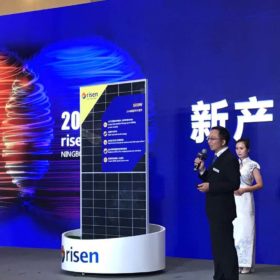
Risen Energy unveils 500 Wp+ half cut mono PERC modules
The PV manufacturer announced the development of the new solar panels, which feature new M12 series monocrystalline wafers, at a conference on Thursday in the Chinese city of Ningbo. The 50-cell modules are actually slightly bigger than 72-cell designs with 156.75 mm wafers, it said.

Power Ledger, Japan’s Kepco extend blockchain energy collaboration
Japanese utility Kansai Electric Power has extended a demonstration project with Australian P2P energy pioneer Power Ledger to track renewable energy certificates and trade PV-generated electricity.

100% renewables means 95% less water consumption for conventional power generation
According to a new study by Finland’s LUT University, solar PV consumes between 2% and 15% of the water that coal and nuclear power plants use to produce just 1 MWh of output; for wind, this percentage ranges from 0.1% to 14%. Under the researchers’ best policy scenario, water consumption could be reduced by 75.1% by 2030, compared to 2015 levels.

Investors learn about Tasmania’s green hydrogen potential
The Australian state of Tasmania has approached international investors to present its unique potential for the production of hydrogen from renewable sources, as it aims to position itself at the forefront of the nation’s green hydrogen push.
