
Uzbekistan announces tender for up to 900 MW of solar
The central Asian nation and the International Finance Corporation have signed a mandate to develop up to 900 MW of solar capacity through public-private partnerships.
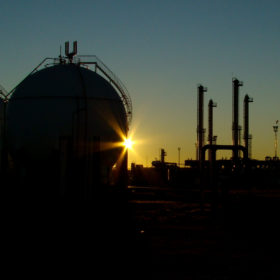
ACWA Power plans 3.6 GW of new fossil fuel capacity in Bangladesh
Renewables may be making encouraging advances in the south Asian nation but the natural gas infrastructure deal announced today by the Saudi power company at a stroke eclipses the 375 MW of solar capacity in Bangladesh and its 609 MW development pipeline.
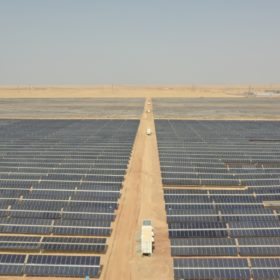
Completion of 390 MW Benban projects crowns impressive quarter for Scatec Solar
With power production up 133% year-on-year, revenues and EBITDA also rose significantly.

Energy access for Puerto Ricans after Hurricane Maria
In this op-ed for pv magazine, Roy Torbert and José Juan Terrasa-Soler, of the Rocky Mountain Institute and Resilient Power Puerto Rico, respectively, analyze the cost of Puerto Rico’s energy recovery and the role that microgrids play in reconstruction and resiliency.

China Power International reveals details of 500 MW grid-parity project
The Chaoyang facility is the largest of the first batch of central-subsidy-free solar projects approved in the world’s biggest solar marketplace. China Power has awarded three construction contracts to entities owned by its SPIC parent company.
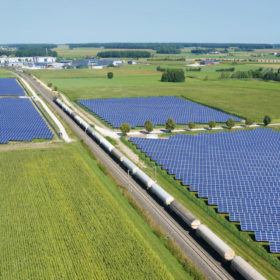
German PV tender brings average solar price of €0.049/kWh
The average price in the October round of Germany’s solar capacity procurement program fell back below the five-cent mark, helped by expansion of the quota for solar on Bavarian agricultural land. Nineteen of the 27 projects allocated by the Federal Network Agency were such schemes.
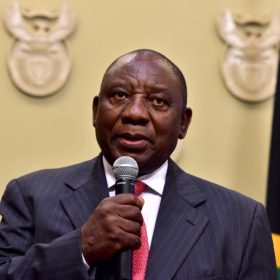
South Africa plans to allocate at least 6 GW of large scale solar by 2030
That would take the country to 8.28 GW of generation capacity by the end of the next decade with the government stating up to 6 GW of small scale capacity could be required on top. By that stage, however, coal would still amount to 43% of generation capacity and gas and diesel a combined 8.1%, under the new Integrated Resource Plan.
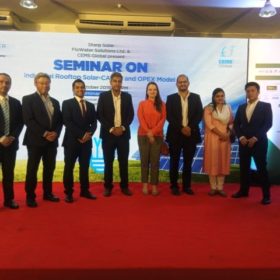
Bangladeshi industrial sector embraces leasing model for solar rooftops
The affordable public financing packages on offer for solar rooftops are attracting developers who have clients happy to lease out roofspace without any capital outlay in order to secure cheaper power.
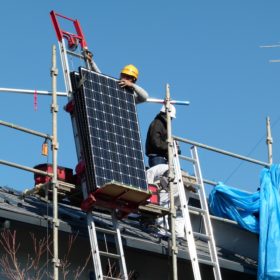
Commercial rooftops will lead renewables growth in the next five years
Although the International Energy Agency’s latest renewables report forecasts impressive solar growth there is still a nagging feeling it has produced conservative estimates and the emphasis on sharing costs with grid operators is predictable.

Average solar power price in Brazilian A-6 auction reaches $20.52/MWh
Only 530 MW of the 2.97 GW of renewable energy generation capacity contracted in the procurement exercise went to solar. Eleven solar projects were successful and their final electricity prices were far below those offered by competing technologies.
