US corporate clean energy procurement platform opens in Europe
LevelTen claims its online platform offers small companies the chance to band together to buy green energy and connects renewable energy producers and consumers in such an effective manner it has already driven $1 billion of green energy supply in its homeland.

Ib vogt partnership wins bid for 50 MW solar plant in Bangladesh
The German project developer beat rival Scatec Solar to land the contract for a facility which will sell solar electricity to the Bangladeshi government for $0.1094/kWh for 20 years.

Solargiga’s Taiwan shares to be de-listed
The ever worsening balance sheet of the Hong Kong-based solar manufacturer has triggered the removal of shares listed in Taiwan, which is likely to leave the company with a $2.84 million bill for buying them back.

Belt and Road to bring 1 GW of solar to Italy
Chinese state-owned PV manufacturer Jetion Solar says it has signed a deal with Italian government-owned oil and gas major Eni to develop a slew of new solar projects across five regions in the next three years in a deal worth €2 billion.
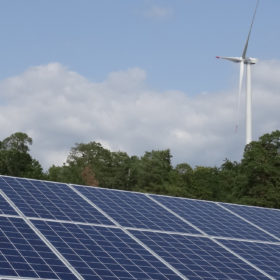
Forestalia plans additional 1.3 GW of solar in Spain
The Spanish company plans to develop 66 solar and wind parks that will add 3 GW of renewable energy generation capacity in 50 municipalities near Teruel, Aragon over the next four years. Some 34 facilities will be solar plants that will add 1.3 GW as part of an investment of more than €2.4 billion.

Uruguay launches 65 MW solar tender
Utility UTE is planning to resume solar energy development with a new large scale PV project after several years of almost zero growth.
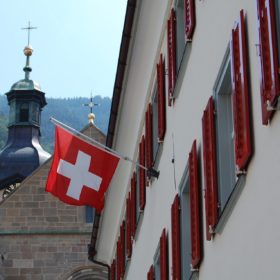
Switzerland plans large scale solar auctions
The Swiss Federal Council intends to increase competition in the solar sector and set fixed tariffs for large PV projects using tenders. The electricity market will be fully opened up in a move industry association Swissolar says will discriminate against PV and threaten the rapid expansion of renewables.
How will China’s electricity price reform affect solar?
The nation’s plan for grid-parity solar – brought forward to ease a mounting public PV subsidy debt burden – could be left in ruins by a newly-announced scheme to part liberalize the electricity price, itself motivated by a need to bail out financially stricken state-owned power companies.

Macquarie to invest in 20 GW pipeline of renewables
With hundreds of billions of dollars in assets and funds under management, Macquarie Group is seeking to amplify its considerable influence, bringing investment and reporting to bear on accelerating climate mitigation and adaptation.
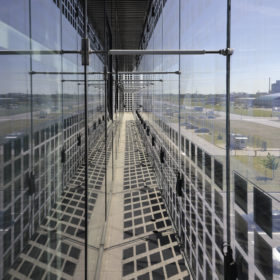
The weekend read: Establishing a cost-effective BIPV sector in Europe
Why hasn’t more building-integrated PV (BIPV) been installed throughout the world? The simplest answer is that a PV module does not architecture make. The nature of the building process – its methods and logic – are key factors affecting technological transfer, as seen in the steel and concrete industries, which have been the basis of modern architecture for the past century. In many cases, standardization would go against the case-by-case approach to design and the interdisciplinary nature of the field. Solar architecture therefore involves a synergic concept of constructive and functional correctness, while always engaging an “aesthetic intentionality.” So how can the market segment continue to drive down costs?
