
China Power’s Hong Kong business on track for return to China
The High Court has approved plans for the Chinese state-owned power company to reassume control of its Hong Kong-listed solar project development business.
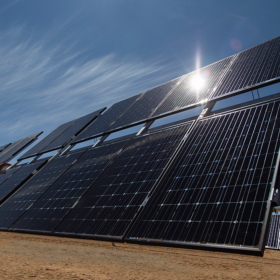
Power deal signed for 230 MW solar plant in Chile
Atlas Renewable Energies has agreed to provide the Chilean unit of French energy giant Engie with 550 GWh annually for 15 years. The electricity will be supplied by the Sol del Desierto project Atlas is building in northern Chile.

Commercial solar at grid parity in China but a hard line is needed on soft costs
Deploying commercial and industrial PV in China without subsidy is already profitable in some areas, according to a new study, but prohibitive soft costs and cheap electricity are the main barriers for such installations in areas where grid parity remains out of reach.
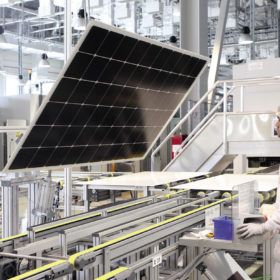
Thinktank says India must prioritize a vertically integrated solar supply chain
To develop cost-competitive solar modules the nation must adopt a phased program and set up 15 GW of silicon-ingot-to-solar-module manufacturing capacity by 2024, according to The Energy and Resources Institute.

The tide is changing for ground-mounted PV in Ireland
Ireland appears ready to embrace PV after years of failed announcements. Globaldata predicts the EU member state will deploy around 1.3 GW of solar by 2030, with renewables potentially meeting 65% of electricity demand. Furthermore, Irish Water has announced it wants to deploy solar at its water treatment plants.

Lithium-ion batteries still set for US tariffs on September 1
The energy storage market is set to be the latest affected by Trump’s trade war as lithium-ion batteries were excluded from the group of Chinese imports for which the U.S. president announced tariffs would be delayed until December 15.
Daqo prepares for flood of new PV orders in China
The polysilicon manufacturer took a step back in the last quarter to take two steps forward in the next, bringing forward annual maintenance operations at its main production facility to prepare for a solar gold rush expected to start next month.

German PV equipment makers report fall in revenue
Manz and Singulus have both seen turnover drop in the first half.

Ganfeng Lithium’s Hong Kong-based shareholders rebel
Holders of almost two-thirds of the miner’s Hong Kong listed stock voted down a proposal to issue new non-Chinese shares that would dilute their investment by around a quarter. The board had proposed the move to raise funds for further lithium extraction overseas.

Cameroon to improve power supply with 25 MW solar projects
Energy of Cameroon wants to build two solar parks to improve power supply in the country’s northern regions. The projects will be developed by a consortium led by Norwegian solar company Scatec.
