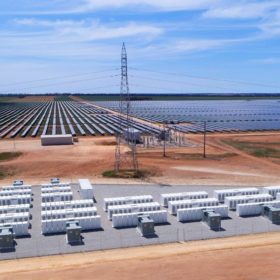
Australia’s AEMO radically curtails output of five large solar farms
The Australian Energy Market Operator constrained the output of several large-scale solar plants by 50% on Friday, in response to voltage fluctuations in a 220 kV network spanning the states of Victoria and New South Wales.
India’s SECI to supply 1.3 GW of clean power through recent deals
With India’s power minister hinting that a new renewable energy tariff policy could be in the works, the federal agency responsible for solar has started boasting about the volume of clean power it has in the pipeline.

Solar microgrid to power Australian industrial park
A consortium led by gas network owner Enwave Australia is developing Australia’s first industrial renewable energy microgrid at a new 120-hectare business park in Nambeelup, Western Australia.

IRENA and the UN ink agreement to combat desertification with renewables
A memorandum of understanding signed by the institutions was not solar specific but the use of PV modules for shading, especially in agriculture, can reduce water consumption and help halt the expansion of deserts.

Sweden increases budget for solar incentives by $48m
Funding for the rebate scheme had already been increased in April. Overall, the budget for this year now amounts to almost $125 million.

Greece to tender 287 MW of new solar capacity in December
The nation’s energy regulator today announced separate tenders for solar and wind generation capacity will be held on December 12.
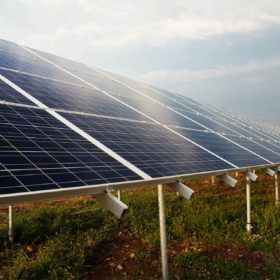
Solar-plus-storage vs grid enhancement part II
Grid expert Andrea Mansoldo tells pv magazine how energy markets based on solar and storage are feasible as an alternative to costly grid infrastructure work. He says around 6 GWh of battery capacity may be a good alternative to building 1000km of power line or an AC 750 kV high-voltage line.
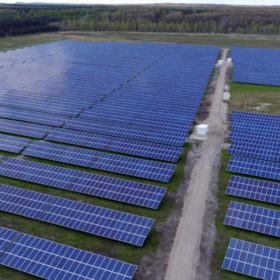
Germany will need 160 GW of solar by 2030 to prevent power shortages
EuPD Research has calculated what needs to be done to replace the nuclear and coal generation to be phased out in Germany. Accelerated expansion of PV appears the best short-term option. However, storage capacity will need to increase 30-fold by 2040 so solar can become the main pillar of the country’s energy system.

Kosovo planning auction scheme for solar and wind capacity
The European Bank for Reconstruction and Development is helping the Kosovan government develop a competitive scheme for the award of payments to renewable energy generators. The Balkan state wants to add 400 MW of clean energy capacity by 2026.
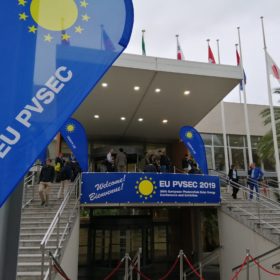
Five takeaways from EU PVSEC 2019
This week, pv magazine headed to Marseille for the 36th edition of the EU PVSEC conference and exhibition. During the week-long show, leading universities and research institutes presented their latest results to the industry and public. As the conference heads into its final afternoon, we’ve put together five key takeaways from this year’s event.
