
The weekend read: PV could help clear Indonesia’s air
The Institute for Essential Services Reform (IESR), an Indonesian think tank, has reported that the country has the potential to install up to 655 GW of rooftop PV capacity. Contrast that with a current installed capacity of just 100 MW, and it’s clear that solar PV still has a long way to go before it reaches its potential throughout Indonesia. Given the poor air quality in many heavily populated cities across the archipelago, PV deployment is long overdue in the Southeast Asian nation.
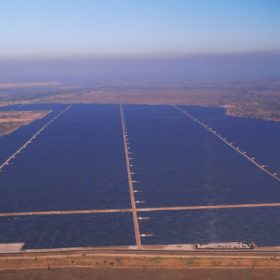
DTEK inaugurates 240 MW solar plant in Ukraine
The energy company wrapped up construction of the site in eight months. In March, DTEK commissioned a 200 MW site which was also installed in record time.
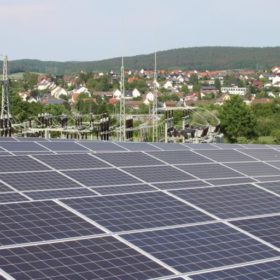
Germany added 2.9 GW of solar in nine months
In September, PV systems with a total generation capacity of 287 MW were registered in the country. The feed-in tariff has fallen again for this quarter as a result of the new capacity additions.
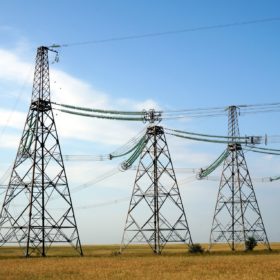
Solar electricity can retail for $0.027-0.036/KWh as renewables close in on global grid parity
The latest figures released by BloombergNEF show new solar and onshore wind power plants have reached parity with average wholesale prices in California, China and parts of Europe. The technologies are winning the race to be the cheapest sources of new generation for two-thirds of the world’s population.
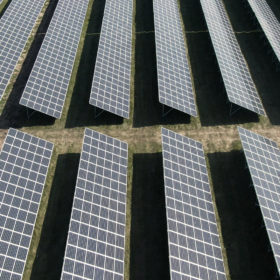
Russian Far East sees 75 MW of large scale solar come online
Five PV power plants, each with a generation capacity of 15 MW, were grid-connected in the Russian Republic of Buryatia and the Zabaikalsky Territory. The projects were built under a program which offers generators capacity payments and the ability to trade on the wholesale energy market.
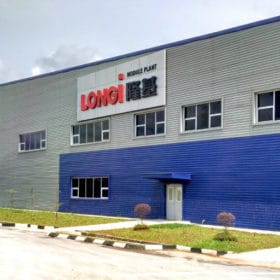
Another 5 GW of module capacity for the Longi juggernaut
The mono giant has announced the latest aspect of a strategy to massively increase production capacity which is currently set to cost around $3.32 billion. Longi last week issued $710 million of new convertible bonds for investors.
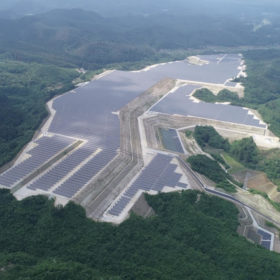
Solar sales recover for electronics brands LG, Kyocera and Panasonic
Korean conglomerate LG reports increasing demand for its high-efficiency PV products in key markets while Kyocera said its solar business is improving profitability. Panasonic posted a slight increase in sales for its PV segment, including solar manufacturing.
European coal fleet will run at a loss of €6.57bn this year
Economic thinktank Carbon Tracker used financial modeling to determine the profitability of every coal power plant in the EU. On average, 79% of the facilities run at a loss, with Germany, Spain and Czechia among the states particularly exposed to the consequences – for coal investors and the public.
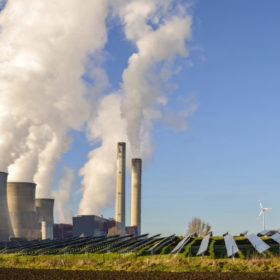
The largest private coal company in the United States just went bankrupt
Despite promises by President Trump to save the coal industry, the crisis in the sector is clear. Solar, wind and batteries have the world to gain.

Saudi power company ACWA secures 200 MW bifacial solar project in Egypt
Saudi energy giant ACWA Power won the tender for the project in August thanks to a lowest final electricity price offer of $0.02752/kWh. Construction of the facility, which will use bifacial panels, is expected to be complete by April 2021.
